Aussie pokies online in Australia: what to know
 Available in AU

The term “Aussie pokies” signals a local framing, but does not establish a service’s licensing, game approval or availability.
Table of Contents
- What “Aussie pokies” means in an online search
- Free play and the limits of what can be verified
- Real-money play: the Australian legal position and its risks
- How to interpret claims about pokie returns and randomness
- PayID transfers, bank blocks and deposit costs
- Social-casino searches and the Melbourne context
- New web-based games and what “fun” can establish
- Bonus wagering requirements and withdrawal conditions
- Pokie downloads and the limits of the available information
What “Aussie pokies” means in an online search
“Aussie pokies” combines a local term for slot-style games with a reference to Australia. In ordinary use, it points to material framed for Australian players or associated with Australian terminology. It is a category label, not a precise description of who operates a service, where a game was made, or what rules apply to either.
The word “pokies” is the familiar Australian term. “Aussie” can signal a local audience, Australian spelling or currency, or simply an Australian theme. Those signals may appear together, but none establishes the others. A page can use Australian language without being operated in Australia; a game can have an Australian theme without being made or licensed there.
The distinction matters because a label describes how something is presented, while licensing is a legal status that must be established separately. The phrase alone cannot show that a site holds an Australian licence, that a game has been approved by an Australian regulator, or that Australian protections apply. Nor does it establish that a particular game or service is available to you.
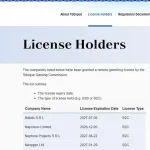
Choosing an online pokies site in Australia means checking practical details such as licensing, minimum deposits and withdrawal methods. Use these operator notes as a starting point and check the terms that apply to you before depositing.
1. LevelUp Casino
License: Curacao eGaming OGL/2023/174/0082 (Dama N.V.) · Min. deposit: A$15 You can start with a minimum deposit of A$15. The listed licence is Curacao eGaming OGL/2023/174/0082, held by Dama N.V.
2. WinSpirit Casino
License: Curacao eGaming OGL/2024/923/0383 (Antillephone N.V.) · Min. deposit: A$30 The minimum deposit is A$30. Its listed Curacao eGaming licence, OGL/2024/923/0383, is held by Antillephone N.V.
3. House of Pokies
License: international iGaming licence – jurisdiction not named in the source · Payout speed: PayID 1-24 hours · Min. deposit: A$30 (PayID from A$10) You can use PayID for payouts, listed at 1–24 hours, and deposit from A$10 with PayID or A$30 otherwise. The source describes its licence as an international iGaming licence but does not name the jurisdiction.
4. Roby Casino
License: Curacao eGaming (Roby Games Ltd) Roby Casino is listed with a Curacao eGaming licence held by Roby Games Ltd. No other operator details are provided here.
5. Golden Pokies
License: Curacao Golden Pokies is listed with a Curacao licence. No other operator details are provided here.
6. MrPacho
Payout speed: crypto 30-120 minutes, fiat 24-72 hours · Min. deposit: A$30 You can deposit from A$30. Listed payout times are 30–120 minutes for crypto and 24–72 hours for fiat.
7. Thor Casino
License: Curacao – Antillephone N.V. (Versus Odds B.V.) · Min. deposit: EUR 20 Thor Casino is listed with a Curacao licence from Antillephone N.V. (Versus Odds B.V.). Its minimum deposit is EUR 20.
8. Ricky Casino
Payout speed: crypto under 1 hour, PayID 1-3 business days · Min. deposit: A$20 (A$30 to qualify for the bonus) Listed crypto payouts take under an hour, while PayID payouts take 1–3 business days. The minimum deposit is A$20, or A$30 to qualify for the bonus.
9. Playfina Casino
License: Curacao eGaming (Hollycorn N.V., since 2017) · Min. deposit: A$20-30 (depends on the offer) Playfina Casino is listed with a Curacao eGaming licence held by Hollycorn N.V. since 2017. Its minimum deposit is A$20–30, depending on the offer.
10. GoldenCrown
License: Curacao Gaming Control Board OGL/2023/176/0095 (Hollycorn N.V.) GoldenCrown is listed with Curacao Gaming Control Board licence OGL/2023/176/0095, held by Hollycorn N.V. No other operator details are provided here.
The reversed wording, “pokies Aussie,” points to much the same broad subject. Word order may vary in short labels, headings and promotional text, but it does not add evidence about the underlying site or game. Read either form as a description of topic and intended context, not as verification.
When you encounter the phrase, separate the clues it contains. “Pokies” tells you the subject is slot-style play; “Aussie” suggests an Australian connection or audience. Any claim about ownership, location, approval or applicable protections needs its own evidence. The wording itself supplies none of those details.
That is the useful limit of the label: it helps identify the kind of material being discussed, but it cannot certify the source. Treating the phrase as proof of Australian licensing would turn a broad description into a claim it does not support.
Free play and the limits of what can be verified
“Free” can describe more than one kind of experience. It might refer to a version of a pokie that can be played without staking money, or to spins attached to an offer. Those are not interchangeable. A free-play label, by itself, does not tell you which meaning applies, whether a game can actually be opened, or what steps are required before play begins.
Treat the wording as a claim that needs to be unpacked. Look for an explanation of what “free” covers: whether you can start without depositing, whether an account is required, and whether the play is only a preview or forms part of an offer. If those details are absent, the label does not establish that you can play without paying or registering. It also does not establish that any particular pokie is available in a free mode.
Big Red Pokies Online in Australia: How They Work · Canberra Pokies: Venues, Hours and What to Verify
This matters when a page presents free play as though it were a feature of every game or site. Availability can depend on the particular game and how it is presented. A general statement about free pokies cannot confirm that a specific title has a no-cost version, or that the version will be accessible to you. The useful evidence is a clear description attached to the game or service itself, not a broad category label.
Before opening a purported free game, check what the page asks you to do. If it requests an account, payment details or a deposit, that is different from an experience that starts without those steps. Read the surrounding wording carefully: a button marked “play” does not explain whether it launches a free mode, an offer, or another part of a service. If the page does not make the distinction clear, you cannot infer it from the word “free.”
Also distinguish free play from free spins offered as a bonus. Free spins are a promotion, not necessarily a separate no-cost version of a game. Their terms can determine how winnings are treated and whether they can be withdrawn; those conditions belong to the bonus offer, not to the general meaning of free play. A page that mentions spins should therefore explain whether they are promotional and direct you to the relevant terms. Do not assume that “free spins” means cash winnings are automatically available to withdraw.
Do
- Look for explanations of what “free” covers
- Check if an account or deposit is required
- Distinguish free play from promotional spins
Don’t
- Assume a “free” label means no cost or registration
- Infer free mode from a “play” button alone
- Assume free spins mean cash is automatically withdrawable
The phrase “Aussie pokies” does not resolve these questions. It does not verify the location of a game’s provider, the way a game is supplied, or the conditions attached to a free-play option. Nor does the addition of “online” prove that a particular version is accessible. Each claim needs to be read at the level it describes: a search category is not evidence of a game feature, and a game label is not evidence of the terms governing its use.
A practical check is to separate three things: the game being named, the kind of play being offered, and the conditions attached to that play. A page may identify a pokie but say nothing definite about a free version. It may describe a free mode but leave account or access requirements unclear. Or it may offer promotional spins whose rules apply only to that promotion. Keeping these claims separate prevents one from being mistaken for another.
If you are comparing pages, use the same questions each time. Does the page say that play costs nothing, or does it only use the word “free”? Does it identify any sign-up or deposit step? Is the offer a playable mode or bonus spins? Are there terms that change how winnings can be used? A direct answer is more informative than repeated use of phrases such as “free pokies” without an explanation.
Free play can be useful for seeing how an interface behaves, but the label alone cannot establish what is available or what conditions apply. Verify the specific description before acting on it, and keep promotional spins separate from no-cost play. When the wording leaves those points unresolved, the accurate conclusion is limited: the page claims something is free, but it has not clearly explained what that means for you.
Best Keno Online Casino in Australia: Legal Context
Real-money play: the Australian legal position and its risks
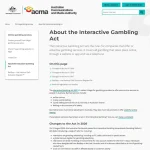
The key distinction is between the person playing and the business supplying the game. Under the Interactive Gambling Act 2001, companies must not provide real-money online pokies to people in Australia without a domestic licence. No Australian online-casino licences have been issued, so there is no Australian-licensed online casino. The prohibition covers online casino-style services offered to people in Australia; it is not a system in which an offshore casino becomes locally licensed simply by accepting Australian customers.
The law’s focus is the operator, not the individual player. An Australian player is not made criminally liable merely for playing on an offshore site that accepts them. That does not make the service lawful for its operator to provide, nor does it give the player the protections they might expect from a locally regulated casino. In practical terms, the legal position for the player and the legal position for the business are different.
The Australian Communications and Media Authority (ACMA) is the principal domestic regulator enforcing the Act. It can arrange for access to illegal offshore gambling sites to be blocked, and internet service providers must comply with its blocklist. A block is an access-control measure; it does not establish that every offshore service is blocked, nor does the fact that a site can be reached establish that the site is authorised in Australia. Availability and legal status are separate questions.
Legal Recourse
If an offshore casino refuses to pay winnings, Australian players have no legal recourse in Australia against that casino.
That distinction matters when you consider what “real money” means in this context. A site may display games, accept account registrations or allow deposits, but those actions do not create an Australian licence or a domestic regulator-client relationship. There is no local online-casino licensing framework under which an Australian authority supervises an offshore casino’s handling of your account. The absence of that framework is especially important if a dispute concerns money you believe you are owed.
If an offshore casino refuses to pay winnings, Australian players have no legal recourse in Australia against that casino. A payment dispute may therefore leave you without a local route to compel the operator to resolve it. Before depositing, consider that risk as part of the decision—not as a problem that can be removed by a site’s Australian-facing language, a familiar payment option or an account login. Those features do not change the operator’s legal status or provide Australian recourse.
Best Pokies in Adelaide: Venue and Gaming Guide
Age is another legal boundary: you must be at least 18 to gamble in Australia, including on online pokies. Meeting that requirement does not change the distinction between a player and an operator, and it does not turn an offshore service into a locally licensed one.
BetStop is a separate point to keep clear. It applies to Australian-licensed operators and does not bind offshore online casinos. Do not assume that registering with BetStop will prevent an offshore site from accepting an account or gambling activity. The service’s limits follow from which operators it applies to, not from the player’s location alone.
For any account where a first withdrawal is contemplated, have identity and address documents verified before that withdrawal. This is a practical safeguard, not a guarantee of payment or a substitute for Australian legal recourse. Keep in mind that an operator may still refuse a withdrawal, and the legal position described above means you cannot rely on an Australian online-casino regulator to resolve that dispute.
Fast Payout Online Casinos in Australia: What to Check
The useful way to read claims about “Aussie” real-money pokies is therefore not as evidence of local approval. Australian players may legally play with offshore sites that accept them, but the service remains outside an Australian online-casino licensing system, and ACMA may block access to illegal offshore gambling sites. The operator’s legal exposure, the player’s lack of liability merely for playing, and the player’s limited protection if winnings are withheld are three separate parts of the same arrangement. A site being reachable, offering an account or using Australian-facing wording does not erase any of them.
How to interpret claims about pokie returns and randomness
A return-to-player figure, or RTP, describes a game setting—not a promise about what you will receive from a particular session. It is useful to separate two ideas that are often blurred together: the return percentage configured for a game and the results produced by individual spins. The first describes the game’s long-run mathematical return under a particular setting. The second is what happens when the random number generator selects an outcome on a spin.
RTP Variability
Some game providers allow casinos to choose between multiple RTP settings for the same pokie, meaning two versions of the same game may have different return percentages.
A specialist review reports that some game providers let casinos choose between multiple RTP settings for the same pokie. If that applies, two versions bearing the same game name may not have the same return percentage. The name and appearance alone do not establish which setting is in use. A return claim therefore needs to be tied to the relevant version and setting; otherwise, it may not describe the game configuration you are looking at.
This is a configuration issue, not a prediction about a coming result. Even when a return figure is stated, it does not tell you what a particular spin will pay, whether a session will end ahead, or how soon a particular feature will appear. It expresses a long-run property of the configured game. A short run of outcomes can differ substantially from that property without showing that the stated setting has changed.
What a return figure does—and does not—tell you
RTP is often described as the share of wagered money a game is designed to return over a very large number of plays. That description is a summary of a mathematical model, not a schedule for paying back each player. The return is not divided evenly between spins or sessions. Some outcomes pay nothing, some return part of a stake, and some may pay more; the pattern depends on the game’s rules and the configured version.
Live Casino Online in Australia: What the Rules Say
For this reason, a stated RTP cannot be read as a personal recovery rate. It does not mean that you will receive that proportion of your own wagers, nor does it specify when any return will occur. It also does not establish how much you might win or lose during a particular period. Those are separate questions from the long-run return setting.
When you encounter an RTP claim, identify what it refers to. Is it connected to the exact game version and setting, or is it presented as a general description of a title? If the setting is not specified, the figure may not be enough to compare that version with another. If different casinos have different settings for the same game, comparing a generic figure for the title can conceal the relevant difference.
The distinction also matters when a claim is repeated in several places. Repetition does not show that every casino is using the same configuration. A game title may be identical while its selected return setting differs. Treat the claim as information about a stated configuration, rather than as a characteristic guaranteed by the game’s name.
Why spins do not follow a sequence
A pokie uses a Random Number Generator, or RNG, to determine the result of each spin. Each spin is an independent event. In practical terms, the result of the previous spin does not make a particular outcome more or less due on the next one. A run of losses does not itself create a compensating win, and a recent win does not itself make another win less likely.
Attention: Each spin is an independent event; a run of losses does not create a compensating win, and a recent win does not make another win less likely.
Independence is easy to misunderstand because people naturally look for patterns in sequences. A series of similar results can feel as though it must soon change; a series of different results can look like evidence that a game is “warming up”. Neither impression follows from independence. The sequence already observed does not provide a reason to expect the next spin to continue it or reverse it.
That does not mean every possible outcome has the same probability. Independence means that one spin does not determine the next. The game’s rules and configuration govern the possible outcomes and their probabilities. The RNG selects an outcome for each spin within that system; the previous selection is not a signal of what comes next.
This distinction separates randomness from predictability. A random process can have defined probabilities while still producing sequences that are difficult to anticipate. Knowing a return setting does not reveal the order of future results. Watching previous spins does not reveal a reliable next result either.
Reading performance claims with care
A claim about a high return and a claim about recent results are not the same kind of evidence. A return figure concerns a configured game over a very large number of plays. A description of a short winning or losing run concerns a limited sequence. That sequence cannot, by itself, establish the game’s RTP setting or show that its RNG is behaving differently.
Live Dealer Casino Online in Australia: Rules and Checks
Likewise, an outcome that seems unusually favourable or unfavourable is not enough to infer that the game has changed settings. The setting is a property of the game configuration; individual outcomes are generated spin by spin. Keeping these levels separate prevents a memorable session from being mistaken for a measurement of long-run return.
If you compare claims, look for precision about the setting rather than relying on a title, theme, or recent results. Ask whether the figure is attributed to a specific version and whether the wording clearly describes a configured return rather than an expected personal result. Where the setting is not identified, the comparison has an important gap. That is a limit on what the claim establishes, not evidence for a particular alternative.
The practical reading is straightforward: RTP can describe a long-run setting, but it does not forecast your session; an identical game name does not prove identical settings; and no previous spin determines the next one. These distinctions make return claims easier to interpret without treating them as guarantees or using a sequence of results as a prediction tool.
PayID transfers, bank blocks and deposit costs
PayID is not a separate bank account or a card network. It is an alias attached to an account on Australia’s New Payments Platform (NPP): a sender can address a transfer using an email address, mobile number or ABN instead of entering the recipient’s account details. The NPP is supported by all major banks, and its transfers use end-to-end encryption. Those features describe the payment infrastructure; they do not establish whether a merchant is licensed, whether a game is fair or whether a site publishes the relevant return settings.
Deposit Safeguards
- Link a PayID to a bank account
- Verify recipient details match the transaction
- Check card terms for potential cash-advance fees
- Confirm the origin and publisher of any software
To use PayID for a real-money deposit, you first need to link a PayID to a bank account. The alias identifies the account to receive a transfer; it does not hold the funds itself. Before confirming a payment, check the recipient details displayed by your banking service and make sure they match the transaction you intend to make. A successful transfer only confirms that money moved through the payment system. It does not verify the merchant’s status or provide assurance about what happens after the deposit.
PayID can also be subject to bank controls. A specialist review has reported that some Australian banks, including members of the Big Four, sometimes block PayID transfers when the recipient is identified as a gambling merchant. That is a report of a changing practice, not a guarantee that a transfer will be accepted or rejected by a particular bank. The result can depend on the bank’s controls and how the recipient is classified. If a payment is stopped, contact your bank through its official channel to establish what happened rather than repeatedly submitting the same transfer.
Card deposits have a different cost risk. A specialist review has warned that a bank or card issuer may classify a gambling payment as a cash advance rather than an ordinary purchase. Under that treatment, the transaction may attract a fee of 3–5% and interest may begin immediately. Whether this applies depends on the issuer’s terms and how it processes the payment; the merchant’s description of a deposit does not determine the card issuer’s classification. Check the relevant card terms or ask the issuer before paying if the cost is unclear.
Pokies in Perth: Checking Venues and Visit Details
The practical distinction is between the transfer method and the financial service that controls it. PayID provides a way to address a bank transfer using an alias, while your bank decides whether to process that transfer. A card uses its own account and issuer rules, which may create a cash-advance charge. Neither method guarantees that a payment will be accepted, and support for PayID should not be read as evidence about a site’s licensing or game information.
Social-casino searches and the Melbourne context
A social-casino label can describe an entertainment style, but it does not tell you exactly what a service contains. It may refer to social features, such as shared play or interaction with other users, or it may simply be part of a product’s branding. The label alone does not establish whether play involves money, whether a particular pokie is included, or whether the service is available to you.
Separate those questions instead of treating “social casino” as a complete description. Check what the activity involves, whether anything of value can be bought or won, and what the service’s own terms say. A social element does not, by itself, confirm that a game is free, that a cash-out is possible, or that a particular feature works in Australia. Nor does the word “casino” prove that the service is a physical venue.
Adding Melbourne narrows the intended location, but it does not verify a Melbourne venue, a local game, or an online service operating there. A place name can express where someone wants to play or what they want to find; it is not evidence that a matching option exists. Keep the distinction clear between a location reference and information about an actual venue or service.
Social Casino Labels
A social-casino label describes an entertainment style but does not confirm if play involves money, if a specific pokie is included, or if the service is available in Australia. It does not establish that a service is covered by BetStop.
The same caution applies to wording that combines “Aussie pokies” with “social casino.” It may describe a broad interest in Australian-style pokies with social features, but it does not identify a particular game or establish its rules. Before relying on a description, look for concrete details about the activity and the service responsible for it. If those details are absent, the label cannot fill the gap.
If your interest is in avoiding gambling, do not assume a social label makes a service suitable for that purpose. BetStop applies only to Australian-licensed operators; it does not bind offshore sites. A service’s use of social language does not establish that it is covered by BetStop, either. Assess what the service actually enables and whether its features match your needs, rather than inferring those properties from a name or location.
This keeps three separate ideas apart: social features, the type of play offered, and a Melbourne connection. None can be confirmed solely by the wording used to describe the others.
New web-based games and what “fun” can establish
“New,” “web-based” and “fun” describe different things, and none is a complete specification of a pokie. If you encounter these labels together, treat each as a claim to interpret rather than evidence that a particular game is available or suitable for your device.
“New” is relative. It could refer to a recent release, a recent addition to a particular catalogue or simply a title that is unfamiliar to you. Without a clear reference point, the word does not establish when a game was released or how recently it became accessible. A date or other specific detail would be needed to make that claim testable.
Best Pokies in Sydney: Venues and Availability
“Web-based” suggests access through a website, but the label by itself does not confirm how the game loads or which devices and browsers support it. It does not establish that the game runs on every phone or computer, that it works without additional software, or that a particular version is available. Those are separate technical details, not consequences of the wording.
“Fun” is a judgment about experience, not a measurable game property. One person may enjoy a particular presentation while another does not. The label does not tell you what the game contains, how it behaves, whether it is suitable for your preferences or whether a real-money version can be accessed. It should not be read as a promise of enjoyment or a prediction of an outcome.
To assess a description, separate what it says from what it leaves unspecified. A named release date can support a claim about recency; a stated browser or device requirement can clarify access; and a precise description can explain what “fun” is intended to mean. If those details are absent, the labels remain broad descriptions rather than evidence.
This distinction matters because a polished page can place several attractive words beside a game without establishing any of the underlying details. You can recognise the wording as a description, but you cannot infer compatibility, release timing, availability or other game attributes from it alone. Nor does calling something new or enjoyable verify its quality. The useful question is not whether the label sounds appealing, but which specific, checkable information supports it.
Game Descriptions
- “New” is relative and requires a specific date for verification
- “Web-based” does not guarantee compatibility with all devices or browsers
- “Fun” is a subjective judgment and not a measurable game property
- Polished descriptions do not verify quality, release timing, or availability
Bonus wagering requirements and withdrawal conditions
A bonus balance is not necessarily withdrawable cash. A wagering requirement, also called a turnover multiplier, sets how much eligible betting must be completed before winnings can be withdrawn. The multiplier may apply to the bonus alone or to the deposit and bonus together; those two calculation bases produce different totals.
A specialist review suggests treating requirements at or below 35x as a more manageable benchmark and describes anything above 40x as punishing. These are that review’s judgments, not universal rules. Check the offer terms for the exact multiplier, what amount it applies to, which games count, and whether a maximum bet or expiry condition can affect progress. A headline bonus amount alone does not show how much turnover is required.
The calculation makes the difference clear. If a $500 bonus has a 40x requirement applied to the bonus, the required turnover is $20,000: $500 multiplied by 40. Under that condition, the bonus-related winnings cannot be withdrawn until the stated wagering is completed. If a 35x requirement applies to a $500 deposit plus a $500 bonus, the calculation uses $1,000, producing $35,000 in required bets. The multiplier is the same kind of figure, but the eligible starting amount changes the result.
Free-spin offers have a separate point to check: the terms may cap the winnings that can be cashed out. Completing any stated wagering requirement would not necessarily remove such a cap. Read the withdrawal limit alongside the wagering rule, rather than assuming that a large win from spins can all be withdrawn.
Before requesting a first withdrawal, have identity and address documents ready for verification. An operator may require those checks before processing access to the balance, so satisfying wagering terms does not itself guarantee immediate payment.
Instant Payout Casinos in Australia: What to Check
BetStop applies to Australian-licensed operators; it does not bind offshore sites. That distinction matters when assessing any bonus conditions or withdrawal promise: the wording of an offer is not the same as a reliable way to enforce it.
Pokie downloads and the limits of the available information
A request for downloadable Aussie pokies may mean you want an app installed on a phone or computer, rather than a game opened in a browser. Those are different delivery methods: a download installs software on your device, while browser access does not by itself establish that an installation is available.
The wording alone does not confirm that a particular pokie has a downloadable version, that an app exists for your device, or that an offered file is genuine. A page describing a game as downloadable is not enough to establish those details. You would need clear information identifying the software provider, the app or file, supported devices and operating systems, and how the software is distributed. Without those details, compatibility and authenticity remain unconfirmed.
Best pokies in Brisbane: how to compare venues
Treat an installation prompt as a request to put software on your device, not as proof of safety. Before proceeding, check who publishes the app, where the file comes from, what permissions it requests, and how updates are handled. A name or logo that resembles a familiar game or provider does not, on its own, verify the publisher. Do not install a file if its origin or purpose is unclear.
A download label also says nothing by itself about whether a game works offline or needs an internet connection. Nor does it establish the game’s features or performance. Those points require specific, reliable information about the software in question.
If the details are unclear, do not infer that a download exists or is suitable for your device. The available description should distinguish an installed application from browser-based access and identify the software being offered. Without that, “downloadable” is only a label, not a verified technical attribute.
Are online pokies legal for Australian players?
Yes, Australian players can legally play on offshore sites that accept them, but there are no Australian-licensed online casinos. The law targets operators, and you have no legal recourse in Australia if an offshore casino withholds your winnings.
Can I play pokies for free?
Some games may have a no-cost play mode, but check whether you need an account or deposit to access it. Free spins are promotions and may have conditions or limits on withdrawable winnings.
What’s the best strategy for playing pokies?
No betting strategy can predict or control the outcome: each spin is an independent random event. You can use deposit, loss and session limits to manage your gambling.
Can casinos change the RTP of their games?
Yes, some providers let casinos choose between multiple RTP settings for a game. The same pokie can therefore have different return percentages at different casinos.
What is the cost-benefit calculation of casino promotions?
Compare the bonus with the wagering requirement: a $500 bonus at 40x requires $20,000 in bets before winnings can be withdrawn. If the requirement applies to a $500 deposit plus a $500 bonus at 35x, it requires $35,000 in bets; also check for limits on free-spin winnings.
Pokies

Three-Reel Slots in Australia: How to Choose
Explore how random outcomes, RTP, paytables and bonus features shape the experience across classic and...

5-Reel Slots in Australia: RTP and Results
See how RNG-driven outcomes differ from RTP, and what paytables and free-play modes can reveal...

7-Reel Slots in Australia: Rules, RTP and Play
Understand bonus triggers, randomness, paytables, RTP and the limits of free play before trying a...

Online Pokies in Australia: Legal and Payment Guide
The guide explains operator restrictions and practical checks around real-money play, bonuses, deposits and withdrawals....

Aussie Online Casinos: Legal Rules and Key Checks
Australia’s rules target operators, while practical checks cover payments, verification, bonuses and withdrawal terms. The...

Australian Online Pokies: Assessing Real-Money Sites
The guide explains the limits of offshore play, payment checks, bonus terms and withdrawal conditions...

Bonus Buy Slots in Australia: Features and Demos
A bonus buy skips the usual trigger and takes its stated price from your balance;...

Adelaide Casino: Hotel, Rooms and Visitor Information
An overview of accommodation checks and visitor topics, including casino rooms, parking, food, entertainment and...

Brisbane Casino Hotels: Booking and Access Guide
Room descriptions, offer conditions and casino access are separate details to verify when considering a...

Best Casino in Canberra: Hotels, Games and Booking Checks
An overview of nearby accommodation checks alongside searches for games, dining, transport, parking and other...

Darwin Casino: What to Verify Before You Visit
A practical guide to checking venue details, booking terms and amenities without treating proposals or...

Hobart Casino Guide: Poker, Rooms and What to Check
Poker offerings can differ by venue and date, while casino rooms may mean accommodation rather...

Best casino in Melbourne: stays and visitor details
A practical guide to accommodation, dining, facilities and visitor details to verify before a Melbourne...

Best Casino in Perth: What to Check Before Booking
A practical guide to accommodation, venue facilities and other details to verify when researching Perth...

Queensland Casino Hotel Stays: What to Check
A practical guide to checking room terms and confirming casino hotel amenities, dining, events and...

Casino in Sydney: Online Options and Local Rules
A Sydney location does not establish that an online service is based in the city...

Best Casino in Tasmania: Hotel and Venue Checks
Casino and hotel listings can describe different properties, so accommodation, booking responsibility and venue details...

Best Casino in Victoria: What to Check Before Booking
Understand which hotel, room, dining and access details need confirmation, and what the available information...

Best Casino in Western Australia? Hotels and Access
Accommodation, casino entry, dining and facilities are separate details, so listings should be checked for...

Fast Payout Online Casinos in Australia: What to Check
A payout claim covers several stages, from account checks and approval to transfer and processing...

High-volatility slots in Australia: payouts and risk
See how independent RNG results, payout patterns and feature waits affect the experience of high-volatility...

Instant Payout Casinos in Australia: What to Check
A withdrawal can involve separate approval, payment and receiving stages, while bonuses or account conditions...

Best Keno Online Casino in Australia: Legal Context
Keno game features, offshore services and Australian legal boundaries are separate questions, not a basis...

Live Dealer Casino Online in Australia: Rules and Checks
Understand how Australian rules, bonus conditions, payment checks and player protections shape real-money live dealer...

Live Casino Online in Australia: What the Rules Say
The guide sets out the Australian legal boundary and explains what live-game, bonus and access...

Low-Volatility Slots in Australia: How They Work
Low volatility usually means smaller wins occur more often, but it cannot predict a spin...

Pokie Machines in Australia: Rules, Odds and Play
A practical guide to reading paytables, RTP and volatility, understanding free-play limits, and spotting legal...

Best Pokies in Adelaide: Venue and Gaming Guide
A practical guide to checking venue status, understanding gaming information and assessing common Adelaide pokies...

Best pokies in Brisbane: how to compare venues
RTP, opening hours, venue evidence and payment conditions each answer different questions when comparing pokies....

Canberra Pokies: Venues, Hours and What to Verify
Understand how pokie outcomes and theoretical returns work, and where the available information about local...

Pokies in Geelong: Venue Hours, Access and Checks
A practical guide to checking venue access, interpreting machine information, and understanding what can be...

Pokies in Melbourne: Venue Details and What to Check
A practical guide to checking Melbourne venue locations, operating details, machine information and the limits...

NSW pokies: venue access, hours and odds
Venue listings may not confirm gaming-area access; the guide also covers odds, online limits and...

Pokies in Perth: Checking Venues and Visit Details
A practical guide to checking gaming-area access, interpreting return and randomness, and separating venue visits...

Best Pokies in South Australia: What to Check
RTP figures describe statistical returns, while venue checks and travel planning help put local pokies...

Best Pokies in Sydney: Venues and Availability
A Sydney search can point to a location, but venue details and machine operating hours...

Best Pokies in Tasmania: Hours, Locations and Play
Venue listings may show general trading hours, while gaming-machine availability, location details and payment terminology...
Progressive Jackpot Slots: Pool and Play Guide
Progressive prizes grow through eligible wagers, but pool rules, reset points and bonus conditions vary...

Real-Money Online Pokies in Australia: Legal Guide
A practical look at the legal position, deposits, bonus conditions, random number generators and access...

RTP pokies in Australia: how returns can vary
RTP reflects a game's long-run mathematical design, while casino configurations and individual outcomes shape what...

RTP Slots in Australia: Understanding Returns
RTP is a long-run theoretical measure, not a forecast for a session; game versions and...

Video Slots in Australia: RTP, RNG and Free Play
RTP describes theoretical returns over large samples, while RNG outcomes remain independent from spin to...

Big Red Pokies Online in Australia: How They Work
An independent spin result is not shaped by previous outcomes; the guide also explains what...

Casino Dice Games in Australia: Rules and Legality
A guide to how dice games are delivered online, how a roll resolves, and how...

Crash Casino Games in Australia: Rules and Payments
A practical guide to crash-game mechanics, casino terms, payment checks and how these games differ...

Lightning Link Online Pokies in Australia: What to Know
Lightning Link is a venue-based game, so online listings, free play and real-money services need...

Live Baccarat Online in Australia: Rules and Risks
A practical guide to live baccarat rules, table features and platform checks, with the distinction...

Live Blackjack at Online Casinos in Australia
Live presentation does not alter the legal status of real-money blackjack, while payment, access and...

Live Roulette in Australia with English-Speaking Dealers
The guide distinguishes game formats, operator claims and live-dealer access, while explaining the Australian restriction...

Mines Casino Game in Australia: How It Works
The guide separates game mechanics from operator rules and explains access limits, demo play, bonus...

Online Casinos in Australia: How to Assess Trust
A practical look at licensing limits, payment routes, bonus terms and what available facts can—and...

Plinko Casino in Australia: Games, Risks and Rules
Plinko’s slot label alone does not establish its mechanics, outcome process or payout structure; reviews...

Pokies Tips and Tricks: What Spins Can Tell You
Understand what random outcomes can—and cannot—tell you, then use RTP comparisons and session limits without...

Real Money Casino Table Games in Australia
Live tables use physical dealers and equipment, while software-based games rely on an RNG to...