Real Money Casino Table Games in Australia
 Available in AU

Live tables use physical dealers and equipment, while software-based games rely on an RNG to determine outcomes.
Table of Contents
- How Online Table Games Determine Each Result
- Bitcoin Payments and the Limits of Comparing Table Games
- What Game Mechanics Can—and Cannot—Tell You About Odds
- What Happens During a Hand, Deal or Roll
- Finding a Casino with Table Games Near You
- What Counts as an Online Table Game
- How Table-Game Formats Differ
- Card Games: Hands, Bets and the Dealer
- Roulette Layouts and the Role of the Zero
- Poker’s Objective: Building the Strongest Hand
How Online Table Games Determine Each Result
The key distinction is where the result comes from. In a live-dealer game, a real dealer uses real casino equipment, and video of the action is streamed to players. In a software-based game, a Random Number Generator (RNG) determines the outcome—for example, which cards are dealt or where a roulette ball lands. Both formats present a table-game experience on screen, but the mechanism producing the result is different.
Live action on screen
A live-dealer game shows a physical event taking place: the dealer and equipment are real, while the video carries that action to players. The result is tied to what happens at the table, rather than being selected by the game’s software RNG. The stream lets you see the action as it unfolds; it is not itself the mechanism that generates the result.
That distinction helps separate two roles that can otherwise look similar on a screen. The video communicates what is happening at the physical table. The dealer and equipment are part of the event that produces the outcome. A digital interface may display information alongside the stream, but that does not make the physical result a software-generated one.
Choosing a real-money casino for table games in Australia means checking the details that matter to you before depositing. Use these operator notes as a starting point and confirm the current terms for your chosen games and payment method.
1. LevelUp Casino
License: Curacao eGaming OGL/2023/174/0082 (Dama N.V.) · Min. deposit: A$15 LevelUp Casino lists a Curacao eGaming licence held by Dama N.V. and a minimum deposit of A$15. Check whether those details suit your plans before you deposit.
2. WinSpirit Casino
License: Curacao eGaming OGL/2024/923/0383 (Antillephone N.V.) · Min. deposit: A$30 WinSpirit Casino lists a Curacao eGaming licence held by Antillephone N.V. and a minimum deposit of A$30. You can use those details when assessing whether it fits your preferences.
3. House of Pokies
License: international iGaming licence – jurisdiction not named in the source · Payout speed: PayID 1-24 hours · Min. deposit: A$30 (PayID from A$10) House of Pokies lists PayID payouts of 1–24 hours and a minimum deposit of A$30, with PayID deposits from A$10. Its source describes the licence as international but does not name the jurisdiction.
4. Roby Casino
License: Curacao eGaming (Roby Games Ltd) Roby Casino is listed with a Curacao eGaming licence held by Roby Games Ltd. That licensing detail is the available point of reference for you.
5. Golden Pokies
License: Curacao Golden Pokies is listed with a Curacao licence. You can consider that licensing detail when reviewing the operator.
6. MrPacho
Payout speed: crypto 30-120 minutes, fiat 24-72 hours · Min. deposit: A$30 MrPacho lists crypto payouts of 30–120 minutes and fiat payouts of 24–72 hours, along with a minimum deposit of A$30. These details may help you choose a payment method.
7. Thor Casino
License: Curacao – Antillephone N.V. (Versus Odds B.V.) · Min. deposit: EUR 20 Thor Casino lists a Curacao licence through Antillephone N.V. (Versus Odds B.V.) and a minimum deposit of EUR 20. Check the deposit currency and amount against your own requirements.
8. Ricky Casino
Payout speed: crypto under 1 hour, PayID 1-3 business days · Min. deposit: A$20 (A$30 to qualify for the bonus) Ricky Casino lists crypto payouts under 1 hour and PayID payouts in 1–3 business days. Its minimum deposit is A$20, or A$30 to qualify for the bonus.
9. Playfina Casino
License: Curacao eGaming (Hollycorn N.V., since 2017) · Min. deposit: A$20-30 (depends on the offer) Playfina Casino lists a Curacao eGaming licence held by Hollycorn N.V. since 2017. The minimum deposit is A$20–30, depending on the offer.
10. GoldenCrown
License: Curacao Gaming Control Board OGL/2023/176/0095 (Hollycorn N.V.) GoldenCrown lists a Curacao Gaming Control Board licence, OGL/2023/176/0095, held by Hollycorn N.V. You can use this licensing information as a reference when considering the operator.
Because the dealer and equipment are real, a live table is not simply an animated simulation. The defining feature is the streamed physical game. If the screen instead shows a wholly digital table and generated action, the outcome belongs to the software-based category, even when the presentation resembles a casino table.
Outcomes generated by software
In an online software-based table game, the RNG is responsible for the result. For cards, it determines what you are dealt; for roulette, it determines where the ball lands. The on-screen table is the way you interact with the game and view its result, not evidence that a physical dealer or wheel is involved.
This means that animation and outcome generation are separate parts of the experience. Software can display dealt cards or a ball moving around a wheel, but the relevant mechanism is the RNG that determines the result. A visual sequence should not be mistaken for proof that a physical event occurred.
The same distinction applies if the interface is designed to look like a live table. Appearance alone does not tell you whether the result comes from a real dealer and equipment or from software. The useful question is what produces the outcome: a streamed physical game, or an RNG operating within the online game.
Pokies & Games: Australian Slots and Casinos
What the distinction does—and does not—tell you
The format identifies the source of the result; it does not, by itself, tell you whether one game is preferable, how likely a particular outcome is, or what a player might receive. A live stream is evidence of a dealer and physical equipment being shown, while a software-based game uses an RNG to determine its outcome. Those are descriptions of process, not assessments of value.
Nor should “live” be treated as a general guarantee about every feature of an online table. The defining point here is that a real dealer and real equipment are shown through streamed video. In the software format, the RNG determines the result, even if the interface uses realistic graphics. Keeping those functions separate makes it easier to understand what you are seeing without assuming that presentation and result generation are the same thing.
The Australian legal context
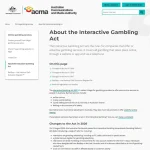
The way a game produces an outcome is separate from whether it may legally be offered. Australia’s Interactive Gambling Act 2001 restricts operators based in Australia from offering real-money online casino games to residents. Section 5 of the Act prohibits Australian-based operators from providing real-money interactive casino games to people in Australia. The Australian Communications and Media Authority enforces the rules and blocks unlicensed domestic platforms.
So, describing the difference between streamed live action and RNG-generated outcomes is not a recommendation to play or an indication that a particular service is available in Australia. The technical distinction explains how the result is produced; it does not change the legal status of providing real-money online casino games to people located in the country.
Legal Restriction
Section 5 of the Interactive Gambling Act 2001 prohibits Australian-based operators from providing real-money interactive casino games to people in Australia.
Bitcoin Payments and the Limits of Comparing Table Games
Bitcoin and a table game describe different parts of an online gambling service. Bitcoin is a payment method; a table game is an activity with rules and a way of producing outcomes. Calling a game a “Bitcoin table game” does not, by itself, explain how the game works or establish that Bitcoin can be used to pay for it.
That distinction matters when comparing Bitcoin-labelled games with other online table games. The payment method does not rewrite a game’s rules. In online versions, a random-number generator determines matters such as which cards are dealt or where a roulette ball lands. Whether a game is presented alongside a Bitcoin payment option does not change that function. Nor does the payment label tell you how a particular game’s interface works.
The phrase “Bitcoin casino table games” can therefore refer to two separate questions: what table-game activity is described, and what payment methods a service says it supports. The first concerns the game. The second concerns transactions. Evidence about one does not establish details about the other. A game name or payment label alone is not enough to draw conclusions about fees, processing times, transaction limits or the conditions attached to a payment.
The same separation applies when someone asks whether Bitcoin table games are different from “normal” casino table games. Bitcoin does not name a distinct set of rules. To compare games meaningfully, you would need information about the rules and operation of each game, not merely the payment method associated with a site or page. Without those details, “Bitcoin” is a category label for payment context, not a useful measure of how play differs.
Three-Reel Slots in Australia: How to Choose
Requests for the best Bitcoin table games or the best table games in a casino also combine questions that need different evidence. A ranking would require a stated basis for comparison and reliable information about the games being ranked. The payment method cannot supply that basis. A list headed “best” would be misleading if it did not explain what “best” means and provide comparable evidence for each entry.
Likewise, “best odds” is not answered by identifying a payment method. The method used to transfer funds does not, on its own, establish the likelihood of a particular result. A comparison of odds needs game-specific information and a consistent way to evaluate it. Without that, naming one game as superior would turn an unsupported preference into a factual-sounding claim.
Terms such as “tabletop” or “felt table” may describe a physical-looking presentation, but they do not establish a game’s rules, payment support or outcome process. A visual label is not proof of how a game functions. The same caution applies to claims that a table game is open or available: those words alone do not explain the circumstances in which it can be accessed.
Keep the categories distinct: payment descriptions concern transactions; game descriptions concern rules and play; comparisons require evidence relevant to the quality being compared. Bitcoin does not make a table game better, establish its odds or show that a service supports a particular payment method. Without clear, specific information for each question, a ranking of Bitcoin table games—or a claim that one is the best—cannot be justified.
Do
- Keep payment descriptions separate from game rules
- Base game comparisons on specific rules and operation
- Use defined measures to evaluate odds
Don’t
- Assume a payment label explains how a game works
- Use “best” rankings without a stated basis for comparison
- Infer odds based on the payment method used
What Game Mechanics Can—and Cannot—Tell You About Odds
A table game’s rules tell you what counts as an outcome and how the game distinguishes one result from another. That is useful when you are trying to understand odds, but it does not, by itself, show which game offers the best odds or the highest return. To make a valid comparison, you would need the relevant rules and the probabilities attached to the outcomes—not just a description of the game’s objective.
Roulette illustrates why the details matter. The main online versions are European, French and American. European and French wheels have numbered pockets and a single green zero; an American wheel has those numbered pockets plus a green zero and a green double zero. That difference changes the set of possible wheel results. If a bet wins on a particular numbered result, an additional pocket that does not meet that condition affects how often the bet can win. The layout therefore matters to the odds of a specific bet.
But the wheel layout alone does not supply a complete comparison. You also need to know exactly what the bet covers and what the game pays when it wins. A statement that one layout has an extra pocket does not tell you the odds of every possible bet, because bets can cover different outcomes. Nor does it establish a table’s overall return: that depends on the payout rules as well as the results that qualify.
Blackjack has a different structure. You compete against the dealer, aiming for a hand value closer to 21. That objective identifies the contest, but it is not enough to calculate the odds of winning. You would need the rules that determine how hands are played and resolved, together with the possible outcomes and their probabilities. Knowing the target value does not show how often a player reaches it, how often the dealer does, or how a particular rule affects the comparison.
Mines Casino Game in Australia: How It Works
This is why a simple “best odds” ranking can be misleading. The label may refer to the chance of winning a particular bet, the amount paid when it wins, or the expected return across repeated play. Those are related, but they are not interchangeable. A bet that wins more often is not automatically the one with the best return if its payout is smaller; a less frequent win is not automatically worse if its payout differs. You need a defined measure and the full rules before comparing.
A house-edge chart also needs context. A percentage without an identified version of the game, bet type and applicable rules may not describe the play you have in mind. Even a figure attached to a named game cannot be transferred automatically to another layout or bet. The mechanics help you identify which details to inspect; they do not replace those details.
So, when assessing table-game odds, start by separating the game’s objective from the conditions that determine a result and its payout. Roulette’s wheel layout affects the pool of possible results. Blackjack’s target explains what players are trying to achieve against the dealer. Neither fact alone establishes which table game has the best or worst odds. A reliable comparison requires specific rules and a clearly defined measure, not just a game name or a broad description of how it works.
7-Reel Slots in Australia: Rules, RTP and Play
What Happens During a Hand, Deal or Roll
A table-game round is organised around an event: a hand is dealt, a set of hands is compared, or dice are rolled. Your bet identifies the result or side you are backing. The exact sequence depends on the game, but the central distinction is whether you are competing against a dealer, choosing between hands, or trying to form a strong poker hand.
In Australia, the Interactive Gambling Act 2001 prohibits operators from providing real-money online casino games to people in the country. The descriptions below explain how the named game mechanics work; they are not an invitation to use an online gambling service.
Blackjack: your hand against the dealer’s
In blackjack, you and the dealer each have a hand. The aim is to finish with a hand value closer to 21 than the dealer’s hand. The comparison is between those two totals: your hand is not being judged against the hands of other players at the table.
Crash Casino Games in Australia: Rules and Payments
That changes what a bet means. You are backing your hand to come closer to 21 than the dealer’s, rather than selecting a winning hand from a group of players. The value of the hand matters because it is the basis of the comparison. If you are learning how a round works, keep that relationship in view: player versus dealer, with closeness to 21 as the objective.
This describes the basic contest, not every decision or rule that can apply during a particular game. The key mechanic is the comparison at the end of the hand.
Betting on a hand, the Banker or a tie
Some card-game betting centres on which of several outcomes will occur. You can place a bet on your hand, the Banker’s hand, or a tie. In this format, your selection is the part of the round you are backing; you are not necessarily trying to build a hand yourself.
Best Pokies in Tasmania: Hours, Locations and Play
The distinction is useful when you encounter table games with dealt hands. A bet on a hand backs that hand, while a bet on a tie backs the tied outcome. The Banker’s hand is another possible selection. These are different choices within the same basic structure: the hands are dealt, and the bet relates to which outcome occurs.
Dice: a roll determines the result
A dice table centres on a pair of dice. Players bet on the outcome, then the dice are rolled. The roll is the event that determines which result the bet is connected to.
This is mechanically different from a card hand. There is no player hand to build in this description: the action is the roll, and the bet is about its outcome. To understand the round, identify what the bet refers to and then note that the dice roll supplies the result.
Poker: forming a hand
Poker centres on players competing to build the best possible hand. Unlike a bet that simply selects a hand or a tie, poker asks players to form hands and compare them. The hand is the unit of play: its strength determines how it stands against the other players’ hands.
Blackjack
Player hand is compared against the dealer’s hand to see which is closer to 21.
Hand-Based Betting
Wagers are placed on specific outcomes, such as the Player hand, Banker hand, or a tie.
Dice Games
A pair of dice is rolled to determine the result of the bet.
Poker
Players compete to build the strongest possible poker hand against others.
These mechanics describe different kinds of participation. Blackjack sets your hand against the dealer’s; hand-based betting asks you to back an outcome; dice play connects a bet to a roll; poker is a contest to make the strongest hand. Knowing what the bet attaches to, or what is being compared, is the starting point for understanding how each round proceeds.
Finding a Casino with Table Games Near You
A request for a nearby casino combines two separate questions: where a venue is, and whether it offers the activity you have in mind. A place appearing close to your location does not, by itself, establish that it has table games, that those games are available to you, or that an online service can lawfully provide them in Australia.
For online real-money casino games, the legal distinction is important. The Interactive Gambling Act 2001 prohibits operators from providing these services to people physically located in Australia. That includes online casino-style table games. The Australian Communications and Media Authority enforces the rules and blocks unlicensed domestic platforms. A website’s apparent accessibility, an Australian-facing description, or a claim that a service is based overseas does not change that prohibition.
This means that a list of online results labelled as casinos near you should not be read as confirmation that the listed services are lawful or available for real-money play in Australia. Nor does a search result establish that a particular provider has a physical venue nearby. Location labels and promotional wording are not substitutes for reliable information about what a place actually is and what it offers.
Real-Money Online Pokies in Australia: Legal Guide
It also helps to keep physical venues and online services distinct. A nearby physical venue is a question of geography and its own published facilities. An online casino is a service delivered over the internet, and the Australian legal restriction applies to operators providing real-money interactive casino games to people in the country. Similar wording in a venue name or search listing does not make those two categories interchangeable.
If you are checking a physical location, first establish whether the result is an actual venue rather than an online service or an advertisement. Then look for direct, current information from the venue about its address and facilities. Do not infer that table games are offered simply because the word “casino” appears in a listing; the specific offering needs to be stated. A result for a different city or country is not evidence of a nearby Australian option, even if the search wording resembles your request.
Searches for newly opened casinos or new table games need the same care. A recent-looking page or a newly published listing does not prove that a venue has opened, that a game is available, or that the information is current. Check what the listing describes before treating it as an option. For online real-money casino play, however, novelty or location does not remove the Australian legal restriction.
The practical meaning of “near me” is therefore limited: it can point to a geographic result, but it cannot establish legality, facilities, or access. Keep those questions separate, and do not treat an online casino result as a recommendation or an indication that real-money play is permitted in Australia.
Attention: An online casino’s apparent accessibility or Australian-facing description does not change the legal prohibition of providing real-money interactive casino games to people in Australia.
What Counts as an Online Table Game
A table game is defined by the activity it represents, not by the screen on which you see it. Online, the category covers games presented through a digital interface in which the outcome comes either from a live dealer using casino equipment or from software. That distinction tells you how the result is produced; it does not, by itself, tell you anything about a game’s odds or whether a service is lawful to use.
In a live-dealer format, a real dealer operates real casino equipment, and a video stream carries the action to players. The digital interface presents that live activity rather than creating the dealer or equipment in software. The stream is therefore part of how the game is delivered, while the dealer and equipment are the source of the visible action.
In a software-based format, there is no live dealer determining the outcome on camera. A random number generator, or RNG, is used to determine the result. In a card game, it determines which cards are dealt; in roulette, it determines where the ball lands. The screen displays the resulting game state, but the result is generated by software rather than captured from a live table.
This gives a useful way to interpret descriptions of online casino table games. “Live dealer” identifies a streamed, physical setup. “Software-based” identifies an outcome generated by an RNG. Both are online presentations of table-game activity, but they rely on different mechanisms to produce what you see.
The word “software” can also refer to systems used to manage casino tables or games. That is a separate use of the term: management software is not itself a table game, and the label alone does not explain how a particular game’s result is produced. To understand the game format, look for whether the description refers to a live dealer and equipment or to an RNG.
Bonus Buy Slots in Australia: Features and Demos
For Australia, the distinction is descriptive, not permission to play. The Interactive Gambling Act 2001 prohibits operators from providing real-money online casino games, including table games, to people physically located in Australia. So a definition of the format should not be read as an indication that such a real-money service is legally available to Australian residents.
The simplest classification is thus based on the source of the action: a real dealer and equipment streamed live, or an outcome generated by software. That framework defines what an online table game is without treating every digital casino-style game as the same kind of system.
How Table-Game Formats Differ
Table games are easier to distinguish by the kind of event that produces the outcome. In roulette, the relevant event is the ball’s landing place. In card games, the central objects are dealt hands. In dice games, the result comes from a roll. These are differences in format: they describe what the game is organised around, not which format is better.
Pokie Machines in Australia: Rules, Odds and Play
Roulette is therefore a wheel-based format. Its outcome is tied to the ball’s position on the wheel, rather than to a hand of cards or a dice roll. That gives roulette a different structure from card and dice games even though all may be grouped under the broad table-game label. The word “table” identifies a category, not a single way of producing an outcome.
Card games centre on cards dealt into hands. Blackjack is one example: the player’s hand is compared with the dealer’s, with the aim of reaching a value closer to 21. Other card formats can organise betting around a hand, the Banker’s hand or a tie. The shared feature is the use of dealt cards; the particular objective and betting choices depend on the game. These distinctions matter because “card game” names a format family, not one fixed set of rules.
Poker also uses hands, but its stated aim is to build the best possible Poker hand. That objective places it among card-based formats while distinguishing its central contest from a game framed around comparing a player’s hand with a dealer’s. The broad category tells you what materials are involved; it does not, by itself, explain how a particular game evaluates them.
Best Casino in Tasmania: Hotel and Venue Checks
Dice games are organised around a roll rather than a hand or a wheel. In the described format, players roll a pair of dice and bet on the outcome. This is a compact structure: the roll is the event on which the game is based, while the bet expresses which outcome is being backed. It is distinct from roulette’s ball landing and from card games’ dealt hands.
These labels help you sort table-game descriptions without treating them as interchangeable. A wheel-based game, a dealt-hand game and a dice-based game may all be called table games, but the underlying activity differs. When a description names roulette, cards or dice, it signals what kind of event the game revolves around. It does not establish that every format is offered in every setting, or that one is inherently preferable to another.
Card Games: Hands, Bets and the Dealer
Card-table games can involve different targets for a wager. In blackjack, you compete against the dealer: the aim is to finish with a hand value closer to 21 than the dealer’s. In another card-game format, a wager can be placed on your hand, the Banker’s hand or a tie. These are distinct choices about which outcome your bet depends on, not different names for the same bet.
That distinction matters when reading a game’s rules. A bet on your hand depends on the outcome associated with that hand. A bet on the Banker’s hand depends on the Banker’s result, while a tie bet depends on the two sides finishing level. The selected outcome determines what the wager is about; it does not change the blackjack objective or turn a hand into a bet against the dealer.
Blackjack’s comparison is direct: your hand and the dealer’s hand are evaluated against the goal of getting closer to 21. A bet on a hand, Banker or tie instead identifies which result you are backing. So the first question is not simply whether a game uses cards. It is whether the rules set up a player-versus-dealer comparison or ask you to predict which named outcome will occur.
Lightning Link Online Pokies in Australia: What to Know
For card table games, keep the hand and the wager separate in your mind. The hand is the card result being assessed; the wager is your chosen position on an outcome. That separation helps prevent a common misunderstanding: the fact that you place a bet on a hand does not, by itself, explain how the hand is assessed. You need the game’s rules for that. Likewise, knowing that blackjack compares your hand with the dealer’s does not describe every other card-game format.
These mechanics describe how the objectives and bet choices differ. They do not establish which wager is more favourable, how often an outcome occurs or what a return might be. A game’s name or the presence of a dealer cannot answer those questions on its own. For real-money casino games, Australia’s Interactive Gambling Act prohibits operators from providing online casino games to people physically located in the country.
Roulette Layouts and the Role of the Zero
Roulette layouts are distinguished in part by the numbers and zero markings on the wheel. The main versions are European, French and American. European and French roulette each have 36 numbered spaces and one green space marked 0. The American layout has a green 0 and an additional green 00.
That extra marking is the key visible difference between the described layouts. On a European or French wheel, the single zero sits alongside the numbered spaces; on an American wheel, the double zero is present as well. When you read a table description or look at a wheel diagram, checking whether it shows 0 alone or both 0 and 00 helps identify which layout is being used.
The American layout differs in the marked spaces because it includes both a green 0 and a green 00. This is a practical way to distinguish the three names without treating every version as a different kind of game.
5-Reel Slots in Australia: RTP and Results
The zero matters as a feature of the layout, not just as a label. A green 0 is part of both the European and French arrangement, while the American arrangement includes a second green marking, 00. If you are comparing roulette tables, look at the wheel markings rather than relying on the name alone. That tells you whether the table shows a single zero or a double zero.
These distinctions describe the wheel’s structure. They do not, by themselves, explain every rule that may apply at a table or establish which layout is preferable. Keeping the comparison narrow makes it easier to identify the version accurately: European and French share the single-zero arrangement, while American roulette includes the additional double-zero marking.
Poker’s Objective: Building the Strongest Hand
Poker centres on a contest between players to build the strongest possible hand. The hand is the basis of the competition: each player’s aim is to form one that can prevail against the others under the rules being played.
Best casino in Melbourne: stays and visitor details
That objective gives poker its basic structure. Players are not trying to produce a hand in isolation; they are competing with other players. A hand’s significance depends on how it compares with the hands at the table. The goal is therefore relative: make the best hand you can, then see how it stands against the opposition.
When you encounter poker among casino table games, keep that central aim in view. The defining activity is the contest to build the best possible poker hand. The broad objective does not, by itself, identify a particular poker format or explain every rule used at a table. Those details belong to the specific game being played, while the shared idea is competition through hand strength.
This distinction helps make sense of the category without assuming that every poker table works identically. Poker is not defined simply by sitting at a table or holding cards. Its central purpose is to compete for the strongest hand. Any more specific description needs to refer to the rules of the particular game rather than treating all casino poker as one uniform format.
Can you play table games online for real money?
Yes, offshore platforms accept Australian players for real-money online games. Australian-based operators are prohibited from offering these games to residents.
Can you legally gamble online in Australia?
Yes, Australians can play through offshore platforms, while Australian-based operators are prohibited from offering real-money online casino games to residents.
Do casino bonuses actually benefit table game players?
They can, but blackjack and roulette may contribute only 10–20% toward wagering requirements, and some games may be excluded. Check the game contribution table and maximum bet in the bonus terms before accepting.
Pokies

Three-Reel Slots in Australia: How to Choose
Explore how random outcomes, RTP, paytables and bonus features shape the experience across classic and...

5-Reel Slots in Australia: RTP and Results
See how RNG-driven outcomes differ from RTP, and what paytables and free-play modes can reveal...

7-Reel Slots in Australia: Rules, RTP and Play
Understand bonus triggers, randomness, paytables, RTP and the limits of free play before trying a...

Online Pokies in Australia: Legal and Payment Guide
The guide explains operator restrictions and practical checks around real-money play, bonuses, deposits and withdrawals....

Aussie Online Casinos: Legal Rules and Key Checks
Australia’s rules target operators, while practical checks cover payments, verification, bonuses and withdrawal terms. The...

Aussie pokies online in Australia: what to know
The term “Aussie pokies” signals a local framing, but does not establish a service’s licensing,...

Australian Online Pokies: Assessing Real-Money Sites
The guide explains the limits of offshore play, payment checks, bonus terms and withdrawal conditions...

Bonus Buy Slots in Australia: Features and Demos
A bonus buy skips the usual trigger and takes its stated price from your balance;...

Adelaide Casino: Hotel, Rooms and Visitor Information
An overview of accommodation checks and visitor topics, including casino rooms, parking, food, entertainment and...

Brisbane Casino Hotels: Booking and Access Guide
Room descriptions, offer conditions and casino access are separate details to verify when considering a...

Best Casino in Canberra: Hotels, Games and Booking Checks
An overview of nearby accommodation checks alongside searches for games, dining, transport, parking and other...

Darwin Casino: What to Verify Before You Visit
A practical guide to checking venue details, booking terms and amenities without treating proposals or...

Hobart Casino Guide: Poker, Rooms and What to Check
Poker offerings can differ by venue and date, while casino rooms may mean accommodation rather...

Best casino in Melbourne: stays and visitor details
A practical guide to accommodation, dining, facilities and visitor details to verify before a Melbourne...

Best Casino in Perth: What to Check Before Booking
A practical guide to accommodation, venue facilities and other details to verify when researching Perth...

Queensland Casino Hotel Stays: What to Check
A practical guide to checking room terms and confirming casino hotel amenities, dining, events and...

Casino in Sydney: Online Options and Local Rules
A Sydney location does not establish that an online service is based in the city...

Best Casino in Tasmania: Hotel and Venue Checks
Casino and hotel listings can describe different properties, so accommodation, booking responsibility and venue details...

Best Casino in Victoria: What to Check Before Booking
Understand which hotel, room, dining and access details need confirmation, and what the available information...

Best Casino in Western Australia? Hotels and Access
Accommodation, casino entry, dining and facilities are separate details, so listings should be checked for...

Fast Payout Online Casinos in Australia: What to Check
A payout claim covers several stages, from account checks and approval to transfer and processing...

High-volatility slots in Australia: payouts and risk
See how independent RNG results, payout patterns and feature waits affect the experience of high-volatility...

Instant Payout Casinos in Australia: What to Check
A withdrawal can involve separate approval, payment and receiving stages, while bonuses or account conditions...

Best Keno Online Casino in Australia: Legal Context
Keno game features, offshore services and Australian legal boundaries are separate questions, not a basis...

Live Dealer Casino Online in Australia: Rules and Checks
Understand how Australian rules, bonus conditions, payment checks and player protections shape real-money live dealer...

Live Casino Online in Australia: What the Rules Say
The guide sets out the Australian legal boundary and explains what live-game, bonus and access...

Low-Volatility Slots in Australia: How They Work
Low volatility usually means smaller wins occur more often, but it cannot predict a spin...

Pokie Machines in Australia: Rules, Odds and Play
A practical guide to reading paytables, RTP and volatility, understanding free-play limits, and spotting legal...

Best Pokies in Adelaide: Venue and Gaming Guide
A practical guide to checking venue status, understanding gaming information and assessing common Adelaide pokies...

Best pokies in Brisbane: how to compare venues
RTP, opening hours, venue evidence and payment conditions each answer different questions when comparing pokies....

Canberra Pokies: Venues, Hours and What to Verify
Understand how pokie outcomes and theoretical returns work, and where the available information about local...

Pokies in Geelong: Venue Hours, Access and Checks
A practical guide to checking venue access, interpreting machine information, and understanding what can be...

Pokies in Melbourne: Venue Details and What to Check
A practical guide to checking Melbourne venue locations, operating details, machine information and the limits...

NSW pokies: venue access, hours and odds
Venue listings may not confirm gaming-area access; the guide also covers odds, online limits and...

Pokies in Perth: Checking Venues and Visit Details
A practical guide to checking gaming-area access, interpreting return and randomness, and separating venue visits...

Best Pokies in South Australia: What to Check
RTP figures describe statistical returns, while venue checks and travel planning help put local pokies...

Best Pokies in Sydney: Venues and Availability
A Sydney search can point to a location, but venue details and machine operating hours...

Best Pokies in Tasmania: Hours, Locations and Play
Venue listings may show general trading hours, while gaming-machine availability, location details and payment terminology...
Progressive Jackpot Slots: Pool and Play Guide
Progressive prizes grow through eligible wagers, but pool rules, reset points and bonus conditions vary...

Real-Money Online Pokies in Australia: Legal Guide
A practical look at the legal position, deposits, bonus conditions, random number generators and access...

RTP pokies in Australia: how returns can vary
RTP reflects a game's long-run mathematical design, while casino configurations and individual outcomes shape what...

RTP Slots in Australia: Understanding Returns
RTP is a long-run theoretical measure, not a forecast for a session; game versions and...

Video Slots in Australia: RTP, RNG and Free Play
RTP describes theoretical returns over large samples, while RNG outcomes remain independent from spin to...

Big Red Pokies Online in Australia: How They Work
An independent spin result is not shaped by previous outcomes; the guide also explains what...

Casino Dice Games in Australia: Rules and Legality
A guide to how dice games are delivered online, how a roll resolves, and how...

Crash Casino Games in Australia: Rules and Payments
A practical guide to crash-game mechanics, casino terms, payment checks and how these games differ...

Lightning Link Online Pokies in Australia: What to Know
Lightning Link is a venue-based game, so online listings, free play and real-money services need...

Live Baccarat Online in Australia: Rules and Risks
A practical guide to live baccarat rules, table features and platform checks, with the distinction...

Live Blackjack at Online Casinos in Australia
Live presentation does not alter the legal status of real-money blackjack, while payment, access and...

Live Roulette in Australia with English-Speaking Dealers
The guide distinguishes game formats, operator claims and live-dealer access, while explaining the Australian restriction...

Mines Casino Game in Australia: How It Works
The guide separates game mechanics from operator rules and explains access limits, demo play, bonus...

Online Casinos in Australia: How to Assess Trust
A practical look at licensing limits, payment routes, bonus terms and what available facts can—and...

Plinko Casino in Australia: Games, Risks and Rules
Plinko’s slot label alone does not establish its mechanics, outcome process or payout structure; reviews...

Pokies Tips and Tricks: What Spins Can Tell You
Understand what random outcomes can—and cannot—tell you, then use RTP comparisons and session limits without...