RTP pokies in Australia: how returns can vary
 Available in AU

RTP reflects a game’s long-run mathematical design, while casino configurations and individual outcomes shape what the figure can tell you.
Table of Contents
- How a Pokie’s RTP Is Set—and Why It Can Vary
- What RTP Means for Australian Pokies
- Online Play: What the RTP Figure Can—and Cannot—Tell You
- Why the Highest RTP Does Not Guarantee a Better Session
- Payout Expectations Beyond the RTP Percentage
- Australian Pokies RTP and Venue-Level Information
- What a Pokies RTP Comparison Leaves Out
- High-RTP Online Play: Check the Terms Around Bonuses
- How to Read Claims About the Highest-RTP Pokies
- RTP, Player Controls and the Australian Online Gambling Context
How a Pokie’s RTP Is Set—and Why It Can Vary
A pokie’s return to player, or RTP, is a theoretical measure of how much of the total stake the game is designed to return over extended play. It describes the game’s mathematical model, not a payout promise attached to an individual spin. To understand why two listings for the same pokie might show different RTP figures, it helps to separate the game’s design from the particular version a casino makes available.
The provider creates the game’s rules and underlying mathematics. Those determine how outcomes are generated and how prizes are assigned. RTP is a result of that model: it expresses the relationship between stakes and returns in the game’s design. It is not a setting that a player can adjust by changing a bet, choosing a feature or playing for longer.
However, a game may be supplied with more than one RTP configuration. A specialist review reports that some providers allow casinos to select from multiple settings for a given pokie. Where that option exists, the same title can therefore have different theoretical return percentages at different casinos. The difference is not necessarily a separate game with a different name or appearance; it may be a different configured version of the same game.
RTP figures alone do not tell you everything to check when choosing pokies. Use this list as a reference point for the operator details available, and verify game-specific RTP information before you play.
1. LevelUp Casino
License: Curacao eGaming OGL/2023/174/0082 (Dama N.V.) · Min. deposit: A$15 You can note LevelUp Casino’s stated minimum deposit of A$15. Its listed licence is Curacao eGaming OGL/2023/174/0082, held by Dama N.V.
2. WinSpirit Casino
License: Curacao eGaming OGL/2024/923/0383 (Antillephone N.V.) · Min. deposit: A$30 WinSpirit Casino lists a minimum deposit of A$30. Its licence is Curacao eGaming OGL/2024/923/0383, held by Antillephone N.V.
3. House of Pokies
License: international iGaming licence – jurisdiction not named in the source · Payout speed: PayID 1-24 hours · Min. deposit: A$30 (PayID from A$10) You can make PayID withdrawals in a stated 1–24 hours, and the minimum deposit is A$30, or A$10 for PayID. The source describes its licence as an international iGaming licence but does not name the jurisdiction.
4. Roby Casino
License: Curacao eGaming (Roby Games Ltd) Roby Casino is listed with a Curacao eGaming licence held by Roby Games Ltd.
5. Golden Pokies
License: Curacao Golden Pokies is listed as having a Curacao licence.
6. MrPacho
Payout speed: crypto 30-120 minutes, fiat 24-72 hours · Min. deposit: A$30 MrPacho lists crypto withdrawals at 30–120 minutes and fiat withdrawals at 24–72 hours. Its stated minimum deposit is A$30.
7. Thor Casino
License: Curacao – Antillephone N.V. (Versus Odds B.V.) · Min. deposit: EUR 20 Thor Casino is listed with a Curacao licence from Antillephone N.V., with Versus Odds B.V. also named. Its stated minimum deposit is EUR 20.
8. Ricky Casino
Payout speed: crypto under 1 hour, PayID 1-3 business days · Min. deposit: A$20 (A$30 to qualify for the bonus) Ricky Casino lists crypto withdrawals in under an hour and PayID withdrawals in 1–3 business days. The minimum deposit is A$20, or A$30 to qualify for the bonus.
9. Playfina Casino
License: Curacao eGaming (Hollycorn N.V., since 2017) · Min. deposit: A$20-30 (depends on the offer) Playfina Casino lists a Curacao eGaming licence held by Hollycorn N.V. since 2017. Its minimum deposit is A$20–30, depending on the offer.
10. GoldenCrown
License: Curacao Gaming Control Board OGL/2023/176/0095 (Hollycorn N.V.) GoldenCrown is listed with Curacao Gaming Control Board licence OGL/2023/176/0095, held by Hollycorn N.V.
That distinction matters when you see a figure attached to a pokie’s name. The title identifies the game, but it does not, by itself, establish which RTP configuration is in use. A figure shown for one casino should not automatically be treated as the figure for every other casino offering that title. The setting available at a particular casino is the relevant one, and a general game description may not identify it clearly.
Think of the RTP as belonging to a specific combination: the game and its selected configuration. If a provider makes several configurations available, each has its own theoretical return. The casino’s version is the one that determines which setting applies when you play there. This is why comparing titles by name alone can give an incomplete picture. You need to know whether the figures refer to the same configuration, rather than assuming that a familiar title has one universal return.
The configuration is not a forecast for your account. RTP summarises the game’s designed return across extensive play; it does not specify what you will receive during a particular visit. Nor does selecting a pokie advertised with a higher RTP make that return certain. The number describes the mathematical setting, not an amount reserved for you or a balance that the game must bring your session up to.
Pokies in Perth: Checking Venues and Visit Details · Best Pokies in South Australia: What to Check
A useful way to read a listing is to treat its RTP as a version-specific specification. Check whether the casino identifies the setting for the game it offers, and whether the stated figure is clearly tied to that version. If a casino’s description gives only the title, the title alone cannot tell you which configuration is active. If two casinos display different figures for the same title, that difference may reflect separate RTP settings rather than an error, but the figures should still be understood in relation to the actual versions offered.
This also explains why lists of high-RTP pokies can be difficult to interpret. A comparison is meaningful only when the figure is attached to the configuration available to the player, rather than copied from a general description of the title. A game may be described elsewhere with one return figure while a casino supplies a version with another. The label “high RTP” therefore needs context: it refers to a stated mathematical setting, and that setting may not be identical across casinos.
Before treating an advertised percentage as a property of the title everywhere, look for information that connects the figure to the casino’s version. The key detail is not merely the game’s name, but which RTP configuration is being offered. Once that is clear, the figure can be read for what it is: a specification of the game’s theoretical return, not a guarantee of a particular result.
What RTP Means for Australian Pokies
RTP, or return to player, is a theoretical measure of how much a pokie returns relative to the money wagered across extensive play. It describes the game’s expected behaviour over a large number of spins, not the amount you should expect to receive during your own session. In practical terms, it is a property of the game’s mathematical model, not a personal payout forecast.
Attention: A published RTP is a theoretical measure of a game’s design; it is not a personal payout forecast or a guarantee of what you will receive during a session.
The distinction matters when you compare pokies available to Australian players. A published RTP can help describe a game, but it cannot tell you what will happen to your balance after a particular sequence of spins. You could receive more than you wager, less than you wager, or nothing back during a session. The theoretical figure does not promise a minimum return or set a limit on how much you can lose.
A theoretical measure, not a personal result
RTP expresses a relationship between wagers and returns over extensive play. The calculation accounts for the game’s possible outcomes and their probabilities. It does not mean that each spin returns a fixed share of your wager, nor does it mean that the game tracks what you have lost and owes you a payout later.
That is why an RTP figure should not be read as a prediction for an individual player. The calculation describes the game as a whole under its stated conditions. Your results come from the outcomes you encounter while playing. A theoretical return cannot tell you which outcomes will occur, how they will be distributed during a session, or whether your balance will rise or fall.
The same principle applies when you compare two pokies. A higher stated RTP indicates a higher theoretical return under the relevant game conditions; it does not establish that you will have a better result on either game. The figure is useful for describing the maths, but it cannot remove the uncertainty built into play.
Best Pokies in Sydney: Venues and Availability · Best Pokies in Tasmania: Hours, Locations and Play
For Australian players, there is another question alongside the number itself: what does the figure apply to, and who is responsible for offering the game? RTP describes a game setting. It is not evidence that a site is licensed in Australia, that Australian authorities supervise its gambling services, or that you have a domestic route to resolve a dispute.
The Australian legal position
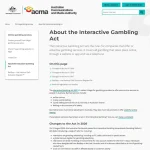
The Interactive Gambling Act 2001 makes it illegal for companies to provide real-money online pokies to people in Australia without a domestic licence. No domestic licences for online casinos have been issued, so there is no Australian-licensed online casino. The legal restriction concerns operators; it does not make an individual player criminally liable simply for playing on an offshore site that accepts them.
These points need to be kept separate. A site may allow an Australian customer to register or play, but that does not make its service Australian-licensed. Nor does a game’s RTP figure change the site’s legal status. The percentage describes the game’s theoretical return, not the regulatory protections attached to the place where you play.
If an offshore casino refuses to pay winnings, Australian players have no legal recourse in Australia. That is a material difference from the way a domestic licence would work: a displayed RTP cannot give you a local regulator to turn to, establish that the operator will honour a withdrawal, or provide a remedy if a dispute arises. Before treating an RTP claim as useful information, separate the technical claim about the game from the separate question of what protections exist for you.
Legal Risk
No online casinos are licensed in Australia. If an offshore casino refuses to pay winnings, you have no legal recourse within Australia.
This is particularly important when a site presents a high RTP as a reason to play. The figure may describe the game’s theoretical maths, but it says nothing by itself about whether the operator is authorised to offer real-money pokies in Australia or whether you can enforce a claim against it here. Do not use a game statistic as a substitute for understanding the legal position.
In short, RTP can help you understand a game’s theoretical return, but it cannot predict your individual outcome or establish that an online casino is locally regulated. In Australia, the legal framework prohibits operators from providing real-money online pokies without a domestic licence, and no such licences have been issued. A site accepting Australian players does not change that fact or create Australian legal protection if a payment dispute occurs.
Online Play: What the RTP Figure Can—and Cannot—Tell You
When comparing online pokies, treat the RTP shown for a game as information about its stated setting, not a forecast for your next session. It describes a theoretical return across play under that setting. It does not tell you how much you will get back from a particular run of spins, or whether you will finish ahead.
The figure is most useful as a comparison point when you have confirmed that you are looking at the same game and the same stated configuration. A title alone may not tell you which return setting is being offered. Read the game’s information panel or help screen and check the RTP value there; do not assume that a figure in a review, search result or game description applies to the version you can open. If the displayed information does not identify a percentage, you cannot reliably compare that game with another using RTP alone.
Pokies in Geelong: Venue Hours, Access and Checks · Pokies in Melbourne: Venue Details and What to Check
This distinction matters because an RTP figure describes an aggregate expectation, while you experience outcomes one spin at a time. A game’s software uses a Random Number Generator to determine each spin, and the result of one spin does not set the result of the next. The percentage is therefore not a sequence of payments that the game must distribute evenly during your visit. A short session may end with returns that differ substantially from the theoretical figure, including a result below it or above it.
For instance, seeing a high RTP beside an online pokie does not mean that a session is likely to return that share of your stake before you stop. The figure does not specify when wins occur, how large they are, or whether a particular run will contain them. Nor does it provide a reliable estimate of your balance at the end of a session. Your stake and the number of spins affect how much you put through the game, but they do not turn its stated RTP into a personal payout promise.
A useful way to read the number is to ask what it actually identifies. Is it attached to the game version you are playing? Is it presented as the game’s RTP rather than as a general claim about a provider or a group of games? If you cannot verify that connection from the game’s own information, treat the comparison as uncertain rather than filling the gap with an assumption.
Do
- Check the game’s own information panel for the RTP value
- Verify if the figure is tied to the specific version offered
Don’t
- Assume a figure from a review applies to every casino
- Treat a general game description as a guarantee of the active setting
The phrase “best RTP” can also obscure what a comparison can establish. A higher stated figure is a higher theoretical return under the specified setting; it does not prove that one session will be better than another. Online RTP comparisons can help you distinguish stated game settings, but they cannot tell you which game will produce a better immediate result.
Before you play, separate two questions: what return percentage is stated for the game you have opened, and what can be expected from a short run of random spins. The first may be answered by the game information. The second cannot be read from the percentage. Keeping those questions apart lets you use RTP as a technical comparison, without treating it as a prediction of your session.
Why the Highest RTP Does Not Guarantee a Better Session
A higher return to player figure can look like a straightforward reason to prefer one pokie over another. It is not a promise about what you will receive in a particular session. RTP describes a theoretical return across play; a session is a limited sequence of outcomes, and its result can differ sharply from that long-run measure.
The mechanism behind each spin explains why. A pokie uses a Random Number Generator (RNG) to determine the outcome, and each spin is an independent random event. The result of one spin does not make a win more or less likely on the next. A run of losses does not create a debt that the game must repay, and a recent win does not mean another win is due.
Best Keno Online Casino in Australia: Legal Context
That independence separates a theoretical percentage from a personal result. The figure does not allocate a share of each wager back to you, nor does it set a payout that must arrive before you stop playing. Your session might end with a return above the theoretical rate, below it, or with no meaningful resemblance to it. The same stated RTP can therefore sit alongside very different experiences for different players.
This is also why comparing the highest RTP pokies in Australia by percentage alone can give an incomplete picture. The figure describes one aspect of a game’s long-run behaviour, not the sequence you will encounter. It cannot tell you whether a particular session will contain frequent small wins, a long stretch without a useful return, or a result that changes suddenly. A percentage is not a schedule of payouts.
The length of a session does not turn randomness into a guarantee. More spins create more opportunities for outcomes to occur, but they do not ensure that your individual results will settle neatly around the theoretical return. Nor can you use past spins as a reliable guide to what comes next. A machine that has paid recently is not necessarily “hot”; one that has not paid is not necessarily “due”.
For a practical comparison, treat RTP as a limited piece of information rather than a forecast. It may help distinguish theoretical return figures, but it cannot answer the personal question of how much you will win or lose during a session. The higher figure does not remove uncertainty, and it does not make a loss impossible. It also cannot establish that one session will feel better than another: session outcomes depend on the random sequence you encounter, not on a promise attached to the percentage.
Each spin in a pokie is an independent random event determined by a Random Number Generator (RNG), meaning previous results do not influence future outcomes.
A useful way to read the claim is: this is a theoretical measure, not a payout commitment. If a comparison presents the highest figure as proof that a player will come out ahead, it has crossed from describing a game into making a prediction the figure cannot support. The number may be relevant to a comparison, but it cannot tell you how the next spin will resolve or guarantee that a session ends positively.
Keep the distinction in view whenever you assess a pokie: RTP describes a theoretical return, while your result is the outcome of independent random spins. Neither a high percentage nor a previous run of outcomes changes the independence of the next spin.
Payout Expectations Beyond the RTP Percentage
A pokie’s RTP describes a theoretical return from play; a bonus wagering requirement sets a separate condition for withdrawing bonus-related winnings. The two figures answer different questions. RTP does not tell you how much turnover an offer requires, and completing the wagering requirement does not change the game’s stated RTP.
A specialist review recommends treating a wagering multiplier of 35x or less as a more manageable condition and describes anything above 40x as punishing. These are the review’s assessment thresholds, not a universal rule. The key is to check what amount the multiplier applies to: the bonus alone, or your deposit plus the bonus. That distinction changes the required turnover substantially.
Live Casino Online in Australia: What the Rules Say
For instance, a $500 bonus with a 40x requirement means $20,000 in bets before the requirement is met. The arithmetic is the bonus amount multiplied by the stated turnover multiplier. Meeting that threshold is a condition for withdrawal; it does not mean you will have the original bonus amount, or any particular sum, left at the end.
A deposit-plus-bonus calculation uses a larger base. If you deposit $500 and receive a $500 bonus, the combined amount is $1,000. At 35x, the required turnover is $35,000. The multiplier is unchanged, but applying it to both amounts rather than the bonus alone raises the total betting requirement.
Before accepting an offer, identify the wagering base and calculate the full turnover. Then compare that requirement with the terms for withdrawing winnings. A headline bonus amount cannot show whether the condition is based on the bonus or the combined deposit and bonus, and an attractive RTP figure cannot resolve that ambiguity.
This is why payout expectations need more than a game percentage. RTP is a theoretical game measure; wagering turnover is a promotional condition that controls when bonus-related funds may become eligible for withdrawal. Treating them as separate mechanisms makes the calculation clearer and prevents a large bonus from being mistaken for immediately withdrawable money.
Australian Pokies RTP and Venue-Level Information
When you compare Australian pokies RTP figures, keep online game settings separate from rules that apply inside land-based venues. A venue’s staffing or record-keeping obligations do not establish the return percentage of a particular pokie. RTP describes a game setting; venue requirements address how gambling activity is monitored and managed on site.
Land-based venue requirements
Venues with over 20 gaming machines must have a dedicated responsible gambling officer (RGO) present and maintain a gambling incident register to document patrons at risk of harm.
A report by regionriverina.com.au describes a requirement taking effect from 1 July: venues operating more than 20 gaming machines must have a dedicated responsible gambling officer (RGO) present while those machines are running. The same report says venues have a one-month grace period to take down relevant signage and put the RGO arrangement in place. These details concern venue operations, not the mathematical settings of individual games.
The report also describes a gambling incident register for venues. It is intended to capture occurrences such as a patron showing behaviour that suggests gambling may be causing harm or that the person may be at risk. The register gives venue staff a way to document incidents; it is not an RTP record and does not show how often a pokie pays, what its return setting is, or how a player’s session will end.
That distinction matters when you see venue information beside an RTP comparison. The presence of an RGO, or a process for recording incidents, cannot be used to infer that a specific game has a higher return or that its advertised percentage has been independently confirmed. Those questions concern the game and the configuration offered, while venue safeguards apply to the physical gambling environment.
Venue-level rules can still provide useful context. They indicate that staff responsibilities and responses to signs of harm are part of how some land-based gambling settings are managed. But they do not convert venue oversight into a guarantee about game outcomes. To assess an RTP claim, look for information tied to the game’s actual setting rather than relying on a venue’s general compliance arrangements.
Keep the two kinds of information in separate columns in your reasoning: game data helps explain a theoretical return over play; venue requirements describe operational safeguards. Neither substitutes for the other, and the existence of venue procedures does not make a particular pokie’s RTP higher, lower, or more predictable.
Best Pokies in Adelaide: Venue and Gaming Guide
What a Pokies RTP Comparison Leaves Out
A pokies RTP figure describes a game’s theoretical return setting; it does not describe the payment path around a real-money session. Deposits, bank decisions and transaction fees operate separately. A figure on a game screen cannot tell you whether a payment will be accepted, how your bank will classify it or what it may cost.
That distinction matters in Australia. Real-money online pokies are not offered by Australian-licensed online casinos, and offshore services do not provide Australian regulatory protection. Payment access should not be mistaken for evidence that a site is licensed, that its games are fair or that its RTP information is transparent.
A specialist review reports that Australian banks and card companies are increasingly blocking transactions to known gambling sites. Such restrictions can change, and a payment that worked before may later be declined. A declined transaction is a banking outcome, not a change to the game’s RTP.
Card deposits also have a separate cost risk. A bank or card issuer may classify a gambling transaction as a cash advance; specialist reviews describe possible fees of 3–5%, with interest starting immediately. The exact treatment depends on the issuer and transaction. Check your card terms rather than assuming a gambling deposit will be handled like an ordinary purchase.
PayID is a payment mechanism, not a game attribute. It is an alias layer on Australia’s New Payments Platform, enabling transfers through an email address, mobile number or ABN. To use PayID for a real-money gambling deposit, it must first be linked to a bank account. Its availability says nothing about the operator’s legal status or the accuracy of an RTP claim.
Bank Transfers
Increasingly blocked by Australian banks and card companies for gambling sites.
Card Deposits
May be classified as cash advances with fees of 3–5% and immediate interest.
PayID
An alias layer on the New Payments Platform linked to a bank account.
E-wallets
Options like Skrill and Neteller are used for speed and relative anonymity.
Specialist reviews also describe Skrill and Neteller as popular e-wallet options, citing speed and relative anonymity. Those descriptions concern payment preferences, not a guarantee of privacy, acceptance or successful withdrawal. The payment provider and the gambling operator may each apply their own checks and conditions.
When comparing RTP information, keep the questions separate: what return setting is stated for the game, and what happens to money moving into or out of an account? Banking blocks, fees and payment methods can affect the practical cost or availability of a transaction, but none alters the mathematical meaning of RTP. A payment route cannot make a stated percentage more reliable, and a high percentage cannot resolve a payment dispute.
High-RTP Online Play: Check the Terms Around Bonuses
A pokie’s stated return percentage describes the game, not the conditions attached to a promotion. If you encounter a bonus or free-spin offer, read its terms separately: they determine whether winnings can be withdrawn, and on what conditions. A high RTP does not cancel those rules or convert bonus funds into cash you can immediately take out.
For a bonus with a wagering requirement, the multiplier is applied to a specified amount to calculate the required turnover. The terms should make clear whether that amount is the bonus alone or the deposit and bonus combined. A specialist review recommends looking for requirements of 35x or lower and describes anything above 40x as punishing. Treat that as the review’s assessment, not as a universal standard. The multiplier alone is not enough to compare offers if the amount it applies to is unclear.
Best pokies in Brisbane: how to compare venues
The size of the required turnover can change substantially depending on that base. For instance, applying a 35x requirement to a deposit-plus-bonus total of $1,000 means $35,000 in bets. Applying it to a bonus of $500 means $17,500 in bets. These are turnover calculations, not predictions of losses or winnings. The RTP does not tell you how much of that turnover will be returned during your play, and completing the requirement does not guarantee a profit.
Free spins have a different point to check: a cashout cap. Specialist reviews report that some free-spin offers limit how much of the resulting winnings can be withdrawn. If a cap applies, winnings above it may not be payable under the offer, regardless of the game’s stated RTP. Check the promotion’s own terms for the cap and for any conditions attached to withdrawing the permitted amount.
Before relying on an offer, identify the wagering base, multiplier, eligible play, expiry conditions and any withdrawal cap. If a term is ambiguous, do not assume the interpretation that gives you more withdrawable cash. Promotional rules govern promotional funds; RTP is not a substitute for reading them.
How to Read Claims About the Highest-RTP Pokies
A claim that a pokie has the highest return is meaningful only if it describes the version actually available to you. A specialist review reports that some providers let casinos choose among different RTP settings for the same game. The title alone therefore cannot confirm the return setting in use. Check the game information shown where it is offered, and look for an explicit RTP figure tied to that version. If the setting is not stated clearly, treat a comparison based on another casino’s figure as unverified.
Verify RTP Claims
- Check the RTP figure within the specific game version
- Read the withdrawal caps and payment schedules
- Confirm the required identity and address verification documents
Also check what the claim compares. A figure may describe a game configuration, while a headline may leave that detail unclear or imply a broad ranking. Ask whether the comparison identifies the specific version and the source of its figure. Do not assume that a number attached to a game name applies wherever that game appears.
RTP and withdrawal rules answer different questions. RTP describes a theoretical return over play; it does not set how much you can withdraw at once or how quickly a large balance can be paid. A specialist review has reported casinos with weekly or monthly withdrawal caps of $5,000–$10,000. Under such a cap, a $50,000 jackpot could be paid over multiple years, depending on the applicable limit and payment schedule. Treat these figures as a reported example, not a rule that applies to every casino.
Before relying on a payout claim, read the withdrawal terms separately from the game information. Check whether a cap applies per week or month, how the operator handles balances above it, and whether the stated schedule is conditional. A high RTP figure cannot answer any of those questions.
Check verification requirements as well. Complete identity and address checks before requesting a first withdrawal, and confirm which documents the operator requires. This is a separate condition of accessing funds; it does not change the game’s RTP.
A useful comparison therefore keeps three details distinct: the RTP stated for the offered game configuration, the withdrawal cap and schedule, and the verification conditions. If one is missing or unclear, the headline alone is not enough to assess the claim.
Fast Payout Online Casinos in Australia: What to Check
RTP, Player Controls and the Australian Online Gambling Context
RTP and responsible-gambling controls address different parts of a pokie experience. RTP describes a game’s theoretical return over play; it does not set a personal spending limit or tell you when to stop. Deposit limits cap what you can put into an account, loss limits restrict losses, and session time limits place a boundary on time spent playing. Self-exclusion is a separate option intended to prevent access to gambling for a chosen period. These tools can constrain activity, but they do not change a game’s RTP or make any outcome predictable.
The Australian legal context matters when considering online pokies. The legal age for gambling, including online pokies, is 18. Under the Interactive Gambling Act 2001, operators must not provide real-money online casino games to people in Australia. No Australian online casino licences have been issued. The law targets providers, not individual players, but that does not mean an offshore site is regulated in Australia or that Australian protections apply there.
Canberra Pokies: Venues, Hours and What to Verify
The Australian Communications and Media Authority (ACMA) enforces the Act. It blocks access to illegal offshore gambling sites, and internet service providers must comply with its blocklist. A site being reachable does not establish that it is authorised to provide online pokies in Australia. If an offshore operator does not pay winnings, Australian players have no legal recourse in Australia.
BetStop is a self-exclusion service, but its reach has a defined boundary: it applies to Australian-licensed operators and does not bind offshore sites. Because no Australian online casino licences have been issued, do not assume BetStop will restrict access to an offshore pokie site. A control only works within the services and operators it covers.
When assessing safeguards, separate three questions: what the game’s RTP represents, what limits you can set on gambling activity, and which rules apply to the operator. A high RTP does not substitute for a deposit or loss limit, and a self-exclusion setting does not make an unlawful service lawful. For Australian online play, the central regulatory distinction is between ACMA’s enforcement of the domestic law and offshore services that sit outside Australian licensing and player-protection arrangements.
Pokies

Three-Reel Slots in Australia: How to Choose
Explore how random outcomes, RTP, paytables and bonus features shape the experience across classic and...

5-Reel Slots in Australia: RTP and Results
See how RNG-driven outcomes differ from RTP, and what paytables and free-play modes can reveal...

7-Reel Slots in Australia: Rules, RTP and Play
Understand bonus triggers, randomness, paytables, RTP and the limits of free play before trying a...

Online Pokies in Australia: Legal and Payment Guide
The guide explains operator restrictions and practical checks around real-money play, bonuses, deposits and withdrawals....

Aussie Online Casinos: Legal Rules and Key Checks
Australia’s rules target operators, while practical checks cover payments, verification, bonuses and withdrawal terms. The...

Aussie pokies online in Australia: what to know
The term “Aussie pokies” signals a local framing, but does not establish a service’s licensing,...

Australian Online Pokies: Assessing Real-Money Sites
The guide explains the limits of offshore play, payment checks, bonus terms and withdrawal conditions...

Bonus Buy Slots in Australia: Features and Demos
A bonus buy skips the usual trigger and takes its stated price from your balance;...

Adelaide Casino: Hotel, Rooms and Visitor Information
An overview of accommodation checks and visitor topics, including casino rooms, parking, food, entertainment and...

Brisbane Casino Hotels: Booking and Access Guide
Room descriptions, offer conditions and casino access are separate details to verify when considering a...

Best Casino in Canberra: Hotels, Games and Booking Checks
An overview of nearby accommodation checks alongside searches for games, dining, transport, parking and other...

Darwin Casino: What to Verify Before You Visit
A practical guide to checking venue details, booking terms and amenities without treating proposals or...

Hobart Casino Guide: Poker, Rooms and What to Check
Poker offerings can differ by venue and date, while casino rooms may mean accommodation rather...

Best casino in Melbourne: stays and visitor details
A practical guide to accommodation, dining, facilities and visitor details to verify before a Melbourne...

Best Casino in Perth: What to Check Before Booking
A practical guide to accommodation, venue facilities and other details to verify when researching Perth...

Queensland Casino Hotel Stays: What to Check
A practical guide to checking room terms and confirming casino hotel amenities, dining, events and...

Casino in Sydney: Online Options and Local Rules
A Sydney location does not establish that an online service is based in the city...

Best Casino in Tasmania: Hotel and Venue Checks
Casino and hotel listings can describe different properties, so accommodation, booking responsibility and venue details...

Best Casino in Victoria: What to Check Before Booking
Understand which hotel, room, dining and access details need confirmation, and what the available information...

Best Casino in Western Australia? Hotels and Access
Accommodation, casino entry, dining and facilities are separate details, so listings should be checked for...

Fast Payout Online Casinos in Australia: What to Check
A payout claim covers several stages, from account checks and approval to transfer and processing...

High-volatility slots in Australia: payouts and risk
See how independent RNG results, payout patterns and feature waits affect the experience of high-volatility...

Instant Payout Casinos in Australia: What to Check
A withdrawal can involve separate approval, payment and receiving stages, while bonuses or account conditions...

Best Keno Online Casino in Australia: Legal Context
Keno game features, offshore services and Australian legal boundaries are separate questions, not a basis...

Live Dealer Casino Online in Australia: Rules and Checks
Understand how Australian rules, bonus conditions, payment checks and player protections shape real-money live dealer...

Live Casino Online in Australia: What the Rules Say
The guide sets out the Australian legal boundary and explains what live-game, bonus and access...

Low-Volatility Slots in Australia: How They Work
Low volatility usually means smaller wins occur more often, but it cannot predict a spin...

Pokie Machines in Australia: Rules, Odds and Play
A practical guide to reading paytables, RTP and volatility, understanding free-play limits, and spotting legal...

Best Pokies in Adelaide: Venue and Gaming Guide
A practical guide to checking venue status, understanding gaming information and assessing common Adelaide pokies...

Best pokies in Brisbane: how to compare venues
RTP, opening hours, venue evidence and payment conditions each answer different questions when comparing pokies....

Canberra Pokies: Venues, Hours and What to Verify
Understand how pokie outcomes and theoretical returns work, and where the available information about local...

Pokies in Geelong: Venue Hours, Access and Checks
A practical guide to checking venue access, interpreting machine information, and understanding what can be...

Pokies in Melbourne: Venue Details and What to Check
A practical guide to checking Melbourne venue locations, operating details, machine information and the limits...

NSW pokies: venue access, hours and odds
Venue listings may not confirm gaming-area access; the guide also covers odds, online limits and...

Pokies in Perth: Checking Venues and Visit Details
A practical guide to checking gaming-area access, interpreting return and randomness, and separating venue visits...

Best Pokies in South Australia: What to Check
RTP figures describe statistical returns, while venue checks and travel planning help put local pokies...

Best Pokies in Sydney: Venues and Availability
A Sydney search can point to a location, but venue details and machine operating hours...

Best Pokies in Tasmania: Hours, Locations and Play
Venue listings may show general trading hours, while gaming-machine availability, location details and payment terminology...
Progressive Jackpot Slots: Pool and Play Guide
Progressive prizes grow through eligible wagers, but pool rules, reset points and bonus conditions vary...

Real-Money Online Pokies in Australia: Legal Guide
A practical look at the legal position, deposits, bonus conditions, random number generators and access...

RTP Slots in Australia: Understanding Returns
RTP is a long-run theoretical measure, not a forecast for a session; game versions and...

Video Slots in Australia: RTP, RNG and Free Play
RTP describes theoretical returns over large samples, while RNG outcomes remain independent from spin to...

Big Red Pokies Online in Australia: How They Work
An independent spin result is not shaped by previous outcomes; the guide also explains what...

Casino Dice Games in Australia: Rules and Legality
A guide to how dice games are delivered online, how a roll resolves, and how...

Crash Casino Games in Australia: Rules and Payments
A practical guide to crash-game mechanics, casino terms, payment checks and how these games differ...

Lightning Link Online Pokies in Australia: What to Know
Lightning Link is a venue-based game, so online listings, free play and real-money services need...

Live Baccarat Online in Australia: Rules and Risks
A practical guide to live baccarat rules, table features and platform checks, with the distinction...

Live Blackjack at Online Casinos in Australia
Live presentation does not alter the legal status of real-money blackjack, while payment, access and...

Live Roulette in Australia with English-Speaking Dealers
The guide distinguishes game formats, operator claims and live-dealer access, while explaining the Australian restriction...

Mines Casino Game in Australia: How It Works
The guide separates game mechanics from operator rules and explains access limits, demo play, bonus...

Online Casinos in Australia: How to Assess Trust
A practical look at licensing limits, payment routes, bonus terms and what available facts can—and...

Plinko Casino in Australia: Games, Risks and Rules
Plinko’s slot label alone does not establish its mechanics, outcome process or payout structure; reviews...

Pokies Tips and Tricks: What Spins Can Tell You
Understand what random outcomes can—and cannot—tell you, then use RTP comparisons and session limits without...

Real Money Casino Table Games in Australia
Live tables use physical dealers and equipment, while software-based games rely on an RNG to...