Casino Dice Games in Australia: Rules and Legality
 Available in AU

A guide to how dice games are delivered online, how a roll resolves, and how Australian restrictions apply to casino services.
Table of Contents
- What Online Dice Play Means in Australia
- Casino Dice Games: What the Term Covers
- How to Follow a Dice Game from Bet to Result
- Which Casino Games Use Dice?
- Craps: The Dice Table Game
- Rules, Stakes and Bonus Wagering Conditions
- What Happens When You Roll the Dice?
- Risk and the Limits of Dice-Game Strategy
- What to Expect from a Live Dice Format
- Where the Dice Are Rolled
What Online Dice Play Means in Australia
A dice game can be presented through a website or app, but that description says only how the game is delivered. It does not establish that the service may legally offer real-money casino gambling to someone in Australia. The distinction matters: a digital interface can make a game appear accessible while the law governing its provider remains separate from the game’s format.
Australia’s Interactive Gambling Act 2001 restricts operators from providing online casino services to people physically in Australia. The restriction covers real-money casino-style games, rather than turning on whether a game uses dice, cards or another mechanism. A dice game offered as part of an online casino service therefore sits within the wider regulatory question about online gambling, not in a special category exempt from it.
This also means that “casino dice online” can describe a type of digital presentation without confirming that an Australian-facing service is lawful. A site may accept Australian payments and still operate under a licence issued offshore. That licence does not amount to permission under Australian law to provide prohibited casino services to people here. Payment acceptance, a site’s availability at a given moment and its own description of its licence are not substitutes for the rules that apply in Australia.
If you’re choosing a casino for dice games in Australia in 2026, use this list as a starting point for checking the available operator details. Consider the listed licence and payment information when deciding what to investigate further.
1. LevelUp Casino
License: Curacao eGaming OGL/2023/174/0082 (Dama N.V.) · Min. deposit: A$15 You can note its Curacao eGaming licence, issued to Dama N.V. under reference OGL/2023/174/0082, and its A$15 minimum deposit.
2. WinSpirit Casino
License: Curacao eGaming OGL/2024/923/0383 (Antillephone N.V.) · Min. deposit: A$30 You can check its Curacao eGaming licence, issued to Antillephone N.V. under reference OGL/2024/923/0383, and its A$30 minimum deposit.
3. House of Pokies
License: international iGaming licence – jurisdiction not named in the source · Payout speed: PayID 1-24 hours · Min. deposit: A$30 (PayID from A$10) You’re given an international iGaming licence, though the jurisdiction is not named. PayID payouts are listed at 1–24 hours; the minimum deposit is A$30, or A$10 with PayID.
4. Roby Casino
License: Curacao eGaming (Roby Games Ltd) You’re given a Curacao eGaming licence associated with Roby Games Ltd; no payment or deposit details are provided.
5. Golden Pokies
License: Curacao You’re given a Curacao licence, with no further operator details provided.
6. MrPacho
Payout speed: crypto 30-120 minutes, fiat 24-72 hours · Min. deposit: A$30 You can note the listed payout estimates: 30–120 minutes for crypto and 24–72 hours for fiat. The minimum deposit is A$30.
7. Thor Casino
License: Curacao – Antillephone N.V. (Versus Odds B.V.) · Min. deposit: EUR 20 You can note its Curacao licence through Antillephone N.V. (Versus Odds B.V.) and its EUR 20 minimum deposit.
8. Ricky Casino
Payout speed: crypto under 1 hour, PayID 1-3 business days · Min. deposit: A$20 (A$30 to qualify for the bonus) You’re given crypto payouts under 1 hour and PayID payouts in 1–3 business days. The minimum deposit is A$20, while A$30 is required to qualify for the bonus.
9. Playfina Casino
License: Curacao eGaming (Hollycorn N.V., since 2017) · Min. deposit: A$20-30 (depends on the offer) You can note its Curacao eGaming licence held by Hollycorn N.V. since 2017. The minimum deposit is A$20–30, depending on the offer.
10. GoldenCrown
License: Curacao Gaming Control Board OGL/2023/176/0095 (Hollycorn N.V.) You’re given a Curacao Gaming Control Board licence held by Hollycorn N.V., under reference OGL/2023/176/0095.
The law focuses on the provider’s conduct. Players are not criminalised simply for using an offshore gambling site, but that does not make the service lawful for the operator to offer in Australia or remove the practical risks of relying on it. Access can be interrupted, and the provider may be outside the Australian regulatory framework. The legal status of the service and the possible consequences for an individual user are separate questions; confusing them can lead to the mistaken impression that a site’s presence online is an endorsement or guarantee of protection.
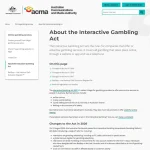
The federal regulator responsible for enforcing the Interactive Gambling Act 2001 and overseeing compliance with federal interactive gambling rules is the Australian Communications and Media Authority, or ACMA. It can ask Australian internet service providers to block websites that supply prohibited interactive gambling services or advertise them to people in Australia. Blocking is an enforcement measure aimed at restricting access to the relevant sites; it does not change the underlying nature of the service or turn a prohibited offer into a permitted one.
ACMA’s enforcement record shows that this is an active area of regulation. Since November 2019, it has blocked more than 1,455 gambling and affiliate websites identified as illegal following enforcement action. The figures reported for services that have left the Australian market since enforcement began in 2017 are not uniform: one account puts the number above 210, while another reports more than 190. Both describe withdrawals by illegal services, but the difference means the totals should not be presented as a single agreed count.
Crash Casino Games in Australia: Rules and Payments
For a person trying to understand an online dice game in Australia, these points establish the boundary between a game’s appearance and the status of the service carrying it. A screen showing dice does not, by itself, tell you whether the operator may provide that real-money casino service here. Nor does an offshore licence establish local authorisation. ACMA’s blocking activity is one reason that a site someone has encountered may not remain reachable through an Australian internet connection.
This regulatory context is separate from the question of what a dice game is or how its rules work. Those details describe the game; the Interactive Gambling Act concerns the provision of online casino services to people in Australia. Keeping the two questions distinct avoids treating a familiar casino format, a working payment option or a website’s claims as proof that the service is legally offered in this market.
If gambling is part of your life, you must be at least 18 to gamble. Gambling can cause serious harm, particularly for people who are vulnerable to it; the fact that a game is played through a digital interface does not reduce that risk. In Australia, the key point is that online access and legal permission are not the same thing: an offshore service may be visible or may process a payment, yet the law still restricts operators from offering real-money online casino games to people located here.
Legal Restriction
Australia’s Interactive Gambling Act 2001 prohibits operators from providing real-money online casino services to people physically located in Australia.
Casino Dice Games: What the Term Covers
A casino dice game is a gambling game in which dice are a central part of how the game produces or represents an outcome. The phrase describes a category, not one standard game with a shared set of rules. Two games can both be called dice games while differing in their layout, available wagers, result conditions and presentation.
The useful boundary is the role the dice play. If the game’s outcome depends on dice, or the rules use a dice result to determine what happens next, it belongs within the broad subject of casino dice games. Dice used only as artwork, a theme or a decorative animation do not make a game a dice game in this sense. The distinction is about the game’s underlying structure, not the images shown on a screen or printed on a table.
“Casino” also describes the gambling context rather than a particular place. It points to a game organised around wagers and defined outcomes, whether its presentation is physical or digital. That does not make every dice game a casino game. A family game, classroom activity or casual app may use dice without involving casino-style wagering. Conversely, a casino game can use dice without resembling the familiar image of a large table and a group of players.
The word “game” matters because the dice are part of a rule system. The rules determine which outcomes count, what a wager refers to and how the game resolves a result. The dice themselves do not explain those things. A pair of dice, for instance, does not carry one universal casino meaning: the same visible result could be treated differently under different games. For that reason, the category cannot be understood simply by looking at the dice or counting them.
Mines Casino Game in Australia: How It Works
This broad definition is useful when you encounter labels such as “casino dice,” “dice casino game” or “dice games” in a gambling context. Such labels indicate a general subject, but they do not identify the precise rules or guarantee that two products work alike. A game’s name, visual design or marketing description may suggest its theme; the actual rules establish how dice function within it. The label alone is not enough to infer the available choices or the significance of any result.
The category can therefore include quite different designs without treating them as interchangeable. Some games place dice at the centre of the whole activity; others make them one component in a larger game structure. The relevant question is whether the dice affect the game’s outcome according to its rules. This keeps the definition wider than any single familiar format while still giving it a practical limit: incidental dice imagery is not sufficient.
A related distinction is between a dice game and a game that merely borrows dice language. A title may refer to rolling, luck or a numbered outcome, yet use a mechanism unrelated to actual dice. In that case, the theme does not determine the category. What matters is the mechanism the rules specify, rather than the name or graphics. This is also why the same general label can cover games that look alike but operate differently, or games that look different while relying on dice in a meaningful way.
Best casino in Melbourne: stays and visitor details
For an Australian reader, the term should be kept separate from assumptions about availability. Calling something a casino dice game describes its design; it does not establish that a real-money service offering it may lawfully be provided to people in Australia. The legal position of online casino services is a separate issue from what a game contains. The label is not an endorsement, an invitation to play or evidence that a particular service is authorised.
This distinction matters because descriptions can combine several ideas into one short phrase: dice as a game mechanism, casino-style wagering, and a way of presenting the game. Those ideas are related but not identical. A careful definition keeps the focus on the first two: dice play a rule-governed role, and the game is framed as casino gambling. It does not assume a specific table layout, a particular set of wagers, or one method of presenting the game.
The term “casino dice games” is thus best read as an umbrella category. It identifies games built around dice within a gambling framework, while leaving the details to each game’s own rules and structure. Any particular title needs to be understood on its own terms. Participation in gambling is for adults aged 18 or older, and this general definition should not be mistaken for guidance to access or use an online casino.
Live Baccarat Online in Australia: Rules and Risks
How to Follow a Dice Game from Bet to Result
A dice game is easier to follow when you separate its stages. First identify what the game lets you predict; then see how a stake is attached to that prediction; next observe the roll; finally compare the result with the rule attached to your choice. The sequence is straightforward, but the wording on the screen or table matters: a bet is not meaningful until you know what event it covers and what counts as a successful result.
Identify the choices before staking
Start with the game’s rules or on-screen help, not the bet controls. Find the available betting choices and establish what each one refers to. A choice might concern a particular result, a range of results, or an event occurring during a round. Those are different predictions, even if their labels look similar.
For each choice, determine three things: what must happen for it to win, what makes it lose, and whether any other outcome leaves it unresolved or changes what happens next. Do not assume that a familiar word has the same meaning in every dice game. The game’s own description defines the event.
Also check whether the choice applies to the next roll only or remains active across more than one roll. If it carries forward, find out when it ends and whether a later roll can settle it. This tells you what you are actually staking on: one result, a sequence, or a condition that remains open until a rule closes it.
Before Staking
- Review the game’s rules or on-screen help
- Identify what must happen for a choice to win or lose
- Determine if the choice applies to one roll or multiple rolls
Connect the stake to the prediction
Once you understand a choice, check the stake amount and the displayed terms before confirming it. The stake is the amount assigned to that selection. If a game allows more than one selection, treat each as a separate commitment unless the rules explicitly combine them. A total shown beside several choices may therefore represent more than one stake, not one prediction with several descriptions.
Check which selection is active and whether the amount shown belongs to it. If you change either the choice or the stake, pause and verify the updated display before proceeding. The important point is not how quickly you can submit a bet; it is whether the submitted bet matches the outcome you meant to predict.
The payout information is part of that decision. Read what the displayed return means: it may describe the total amount returned, or the winnings in addition to the original stake. The game’s wording should make this clear. If it does not, do not infer the difference from the size of the number alone.
Follow the round and settle the bet
After a stake is confirmed, track the game state. Look for an indication that betting has closed and the roll or round has begun. Then note the result the game records. The animation is presentation; the recorded result and the stated rules determine how the bet is settled.
Big Red Pokies Online in Australia: How They Work
Compare that result with the condition you identified before staking. A winning selection is one whose specified event occurred. A losing selection is one whose condition did not occur under the game’s rules. If the rules provide for a void, tie, carry-forward, or another special treatment, apply that provision rather than treating every round as a simple win or loss.
Finally, check the settlement shown for the selection. Confirm whether the stake was returned, whether winnings were added, and whether any unresolved choice remains active. This closes the loop: choice, stake, round, result, settlement. If two parts of the display appear inconsistent, return to the rules and identify which condition governs that bet before starting another round.
This is a way to understand the structure of a dice game, not a guide to accessing real-money online casino play. In Australia, the Interactive Gambling Act 2001 prohibits operators from providing real-money online casino games to people located in the country. A free-play demonstration, where available, can show interface steps, but it does not establish that real-money play is lawful or available.
Which Casino Games Use Dice?
Dice can define a casino game in different ways. In some formats, the dice are the main source of random outcomes and the wagers are organised around those outcomes. In others, dice are only one part of a larger game, or the game uses a digital representation of a roll. This distinction helps separate games built around dice from casino games whose central mechanism is cards, a wheel or a set of symbols.
Games centred on dice
Dice are the main source of random outcomes and wagers relate directly to what the dice show, such as in Craps or Sic bo.
Games using dice as one component
Dice are part of a larger structure, such as a board or sequence, and may only play a supporting role in determining outcomes.
Games with other mechanisms
Games like roulette, pokies, or card games use different central mechanisms and are not classified as dice games.
Games centred on dice
A casino table game with dice places the dice at the centre of the game’s structure: the available wagers relate to what the dice show or to how their results relate to one another. Craps is a familiar example, though its particular table layout and rules are separate matters. Other dice-betting formats use different arrangements of wagers and outcomes, so the shared use of dice does not make them versions of the same game.
The number of dice is one way to classify these formats, but it does not tell you how the game works. A game built around two dice and one built around three dice may differ in its outcome categories, betting choices and interpretation of results. Sic bo, for instance, is associated with three dice. That identifies its equipment, not a complete set of rules: the exact wagers and terms still depend on the version being described.
Games that use dice as one component
Some games include dice without making them the whole organising principle. A game may combine a roll with a board, a sequence of stages or another set of decisions. In such cases, it is useful to ask what determines the main outcomes. If the game’s bets are primarily settled by dice results, it belongs naturally in the dice-game category. If dice play only a supporting role, the broader game may be better classified by its main mechanism.
This avoids treating every appearance of dice as evidence that a game is a standard casino dice format. The same physical object can serve different purposes: it might determine a result, select a later step or simply form part of a game’s presentation. The role it performs matters more than the fact that it is present.
Pokies in Geelong: Venue Hours, Access and Checks
Games with other central mechanisms
Card games are organised around cards and their combinations or sequence. Roulette centres on a wheel and its stopping position. Pokies use symbol reels and their displayed combinations. These games may share the broader setting of casino gambling, but that does not make them games played with dice. Their outcomes are generated and interpreted through different mechanisms.
A digital game can depict dice, but the screen presentation alone does not establish its category. The useful distinction is whether the game’s rules make dice outcomes central to the wagers, rather than whether the interface happens to show dice. Nor does the label indicate that a particular format is legally available to people in Australia: real-money online casino services, including table games, are prohibited from being provided to people located in the country under the Interactive Gambling Act 2001.
So, when comparing casino games that use dice, classify them by the part dice play: central outcome mechanism, one component among several, or merely a visual element. The number of dice may narrow the description, but the game’s rules determine what that number means.
Craps: The Dice Table Game
Craps is a casino table game built around a pair of dice, but the table is more than a place to roll them. Its marked layout organises the available wagers, while the players and staff each have defined roles. Understanding that arrangement helps explain why a craps table can look busy even when only one person is handling the dice.
Real-Money Online Pokies in Australia: Legal Guide
The shooter is the player who rolls. Before a roll, players place chips in the relevant areas of the layout. Some wagers are made directly by players; others are commonly handled by a dealer after the player indicates a choice. The bets belong to the people who placed them, not to the shooter. A player can therefore participate without rolling, and the shooter’s result does not make that player responsible for everyone else’s decisions.
The layout separates wagers into marked zones. The central area contains several types of bets, while areas near the ends of the table are used for the principal pass-line and don’t-pass wagers. The markings matter: a chip’s position identifies the bet, and the relevant rules determine what that position means. Players should not assume that bets in visually similar areas work alike. If a choice or chip placement is unclear, the table staff can identify the marked area before the dice are thrown.
A craps table is usually staffed by several people because many wagers may need to be tracked and settled at once. Dealers manage bets and payouts; a stickperson controls the dice and calls the results; and a boxperson oversees the game and the handling of chips. Exact staffing arrangements can vary, but the division of tasks allows the table to keep the dice, wagers and settlement process organised.
Best Casino in Canberra: Hotels, Games and Booking Checks
The dice themselves are central, but they do not determine a payout on their own. A result matters only in relation to the wager and the point in the game. The same total can have different consequences for different bets, so reading the layout and identifying the wager are as important as watching the dice. The table’s calls help players follow what has happened, but they do not replace the conditions attached to each marked betting area.
When a player is invited to roll, the dice are passed across the table. The shooter selects dice and throws them so they reach the far end, where the table surface and boundary help keep the roll within the playing area. A roll that does not meet the table’s requirements may be treated as invalid and repeated. This makes the table’s physical design part of the game’s procedure, not merely decoration.
Craps can appear intimidating because multiple players may act at different points in the same round. The layout reduces that complexity by giving each wager a specific place, while the staff coordinate the dice and settlement. To follow the table, distinguish the shooter’s role from the other players’ wagers, locate the relevant marked area, and listen for the result and its stated meaning. The dice provide the outcome; the table structure governs how that outcome is handled.
Rules, Stakes and Bonus Wagering Conditions
The rules of a dice game and the conditions attached to a promotion are separate systems. Game rules tell you what choices are available, how a stake is recorded and how the result is settled. Bonus terms govern promotional funds: whether they can be used for particular wagers, how much wagering is required, and when any winnings derived from them may be withdrawn.
Do
- Read game rules before placing a stake
- Check if the return includes the original stake
- Review promotional contribution rates
Don’t
- Rely solely on a displayed payout
- Treat promotional balances as immediate cash
- Assume all games contribute equally to wagering
For the game itself, read the rules before relying on a displayed payout or placing a stake. Check what each available wager refers to, what event makes it win or lose, and how the game treats a tie or other special result. The name of a wager is not enough to establish its effect; the written rules define it. Also check whether the stated return includes your original stake or represents winnings in addition to it. These details affect what a result means for your balance.
A promotional balance is not cash. It may be restricted to specified games or wagers, and meeting a wagering requirement does not necessarily make the bonus amount itself withdrawable. The terms determine what happens to the bonus and to winnings generated while using it. Read the eligible-game list, contribution rates, expiry conditions and withdrawal rules before treating a displayed balance as money available to you.
Pokies in Melbourne: Venue Details and What to Check
A specialist review gives a concrete illustration: a $100 bonus with a 40x wagering requirement calls for $4,000 in bets before bonus-derived winnings can be withdrawn. The figure is an example of terms reported by that review, not a universal condition. The calculation is based on the required wagering amount, not on a promise that the bets will return the amount staked. Bets can lose, and completing the requirement does not ensure a profit.
Contribution rules can also make different games count unequally. In the same kind of source, blackjack is described as contributing only 10% towards wagering requirements. If a game contributes at a reduced rate, the amount staked on it does not count in full toward the requirement. A dice game may have its own contribution rate or may be excluded, so check the promotion’s actual terms rather than assuming all games count equally.
Some specialist reviews describe bonus wagering requirements in a range from 30x to 50x, but an individual promotion’s written conditions control. Compare the calculation, eligible games and withdrawal restrictions together. That is how you distinguish the dice game’s rules from the separate conditions governing promotional funds.
Best Casino in Tasmania: Hotel and Venue Checks
What Happens When You Roll the Dice?
A roll produces the result that the game’s rules use to settle an outcome. The dice show faces when they stop moving, but those faces do not carry a universal meaning. A game may assess each die separately, combine the faces into a total, or treat a particular combination as significant. To understand what a roll means, you need to know which of these interpretations the rules specify.
The physical event is simple: the dice are set in motion, then come to rest. The outcome is the visible arrangement of their faces at that point. If the game uses multiple dice, the result may depend on their combined values rather than on either die alone. If it recognises particular combinations, matching faces or another defined pattern may matter more than the total. The same visible result can therefore have different consequences under different rules.
This distinction matters because a roll does not decide a win or loss by itself. The rules connect the observed result to the game’s possible outcomes. They may assign a result to a particular category, settle a wager immediately, or make the next stage depend on what was rolled. Without that rule, the faces are only an observation; they do not tell you what happens to a stake.
When reading a game’s instructions, look for the exact relationship between the dice and the outcome. Check whether the rule refers to an individual face, a total, a combination, or a sequence of rolls. Also note whether the dice are rolled again after an initial result. These details define what counts as a settled outcome and what remains unresolved.
A casino game that uses dice is not defined by the act of rolling alone. Its rules determine which features of the result matter and how they affect the wager. Once you can distinguish the faces shown from the meaning assigned to them, you can follow the roll without assuming that a familiar combination has the same effect in every game.
Best pokies in Brisbane: how to compare venues
Risk and the Limits of Dice-Game Strategy
A strategy can help you make choices consistently, but it cannot remove the uncertainty in a dice game or guarantee a favourable result. It may organise your decisions around the rules, such as which wagers to make and how much to stake. It cannot control the roll. A sequence of earlier results does not make a particular next result more likely unless the game’s rules explicitly make those events dependent.
Before staking money, decide what amount you can afford to lose and set a stopping point. Treat that amount as a cost, not as money you expect to recover. Increasing stakes to win back losses raises your exposure; it does not make the earlier loss more recoverable. Gambling should not be treated as a source of income. Problem gambling can cause serious harm, particularly for people who are vulnerable, and stopping or seeking support is appropriate if play begins to affect your finances or wellbeing. Gambling is for people aged 18 or older.
Reports about poker machines provide wider context for why gambling risk and harm reduction receive public attention, but they do not predict the results of dice games. In figures reported by gamble.com.au, Victorian poker-machine losses reached $2.6 billion over a year, exceeding the amount recorded in 2015 by more than $44.7 million. The same reporting said the Epping Plaza Hotel in Melbourne’s north generated more than $21 million from its 100 machines over the year. These are poker-machine figures, not evidence about the odds or outcomes of a dice game at a casino.
The reform debate has included proposals to restrict stake size. Senator Nick Xenophon and MP Andrew Wilkie proposed a $1 limit on individual poker-machine bets. That proposal concerned poker machines; it should not be read as a rule for dice games or as proof that a particular limit eliminates gambling harm. It illustrates a broader policy question: how the structure of a gambling product may affect the scale and speed of losses.
Gambling Risk
- Strategies cannot remove uncertainty or guarantee results
- Set a budget and treat it as a cost, not recoverable money
- Avoid increasing stakes to win back losses
- Seek support if gambling affects your finances or wellbeing
When you assess casino dice strategy, separate what a decision can influence from what it cannot. You can choose whether to play, set a budget and stop. You cannot use a strategy to turn uncertain outcomes into dependable returns.
What to Expect from a Live Dice Format
“Live” describes how a game is presented, not a different kind of dice or a new set of rules. In a live-format game, a real person conducts the session and a camera carries the action to viewers. The dice are shown as they are handled and rolled; the result is then read according to that game’s stated rules.
That presentation differs from an automated game, where software generates or displays the outcome without a live human-run session. The distinction is about how the action reaches the viewer. It does not, by itself, change which outcomes count, how a wager is settled or what the rules require. Those details remain specific to the game.
A live broadcast may show the table, the dice and the dealer’s actions, while software displays information such as the current stage or available choices. These visual aids do not replace the rules. If the display and the written rules seem inconsistent, the game’s formal rules determine how the result is handled.
The term “live” also does not mean that every element is improvised or that the viewer controls the roll. It identifies a live presentation of a conducted game. The game can still follow a fixed procedure, and the result still depends on the rules that define the relevant roll.
For people in Australia, there is an important legal distinction: describing a live dice format is not an invitation to access one. The Interactive Gambling Act 2001 prohibits operators from providing real-money online casino games to people physically in Australia. ACMA enforces that law and can seek to block access to websites offering prohibited services. A live presentation does not create an exception or make an otherwise prohibited online casino service lawful.
Best Pokies in Tasmania: Hours, Locations and Play
Where the Dice Are Rolled
The setting tells you what is producing the roll and what you can observe. At a physical table, dice are tangible objects moved across a surface. You can see their path and the faces that finish uppermost; the table and its layout define where the roll takes place. The equipment is present in the room, and the result is visible to people gathered around it.
A screen-based game represents the dice roll digitally. The image may show dice moving and settling, but the display is not a physical table and the depicted dice are not objects you can handle. This distinction concerns the setting and presentation: it does not, by itself, tell you what rules govern a particular game. Those rules determine how a displayed result is used.
The phrase “a casino game where you throw dice” can therefore refer to different contexts. It may describe a physical game in which a person throws actual dice, or a digital representation in which a screen shows a roll. A physical table is a place and set of objects; an online game is software accessed through a device. The visible animation can make the two look similar, but their settings are not the same.
In Australia, that distinction matters when the digital setting involves real-money casino play. The Interactive Gambling Act 2001 prohibits operators from providing online casino-style games to people located in Australia. ACMA enforces the federal rules and can ask internet providers to block sites offering prohibited gambling services. That regulatory context does not turn a screen into a physical dice table, nor does it change what the image represents. It separates the physical setting of a table game from an online service, which is subject to a different legal framework in Australia.
Pokies

Three-Reel Slots in Australia: How to Choose
Explore how random outcomes, RTP, paytables and bonus features shape the experience across classic and...

5-Reel Slots in Australia: RTP and Results
See how RNG-driven outcomes differ from RTP, and what paytables and free-play modes can reveal...

7-Reel Slots in Australia: Rules, RTP and Play
Understand bonus triggers, randomness, paytables, RTP and the limits of free play before trying a...

Online Pokies in Australia: Legal and Payment Guide
The guide explains operator restrictions and practical checks around real-money play, bonuses, deposits and withdrawals....

Aussie Online Casinos: Legal Rules and Key Checks
Australia’s rules target operators, while practical checks cover payments, verification, bonuses and withdrawal terms. The...

Aussie pokies online in Australia: what to know
The term “Aussie pokies” signals a local framing, but does not establish a service’s licensing,...

Australian Online Pokies: Assessing Real-Money Sites
The guide explains the limits of offshore play, payment checks, bonus terms and withdrawal conditions...

Bonus Buy Slots in Australia: Features and Demos
A bonus buy skips the usual trigger and takes its stated price from your balance;...

Adelaide Casino: Hotel, Rooms and Visitor Information
An overview of accommodation checks and visitor topics, including casino rooms, parking, food, entertainment and...

Brisbane Casino Hotels: Booking and Access Guide
Room descriptions, offer conditions and casino access are separate details to verify when considering a...

Best Casino in Canberra: Hotels, Games and Booking Checks
An overview of nearby accommodation checks alongside searches for games, dining, transport, parking and other...

Darwin Casino: What to Verify Before You Visit
A practical guide to checking venue details, booking terms and amenities without treating proposals or...

Hobart Casino Guide: Poker, Rooms and What to Check
Poker offerings can differ by venue and date, while casino rooms may mean accommodation rather...

Best casino in Melbourne: stays and visitor details
A practical guide to accommodation, dining, facilities and visitor details to verify before a Melbourne...

Best Casino in Perth: What to Check Before Booking
A practical guide to accommodation, venue facilities and other details to verify when researching Perth...

Queensland Casino Hotel Stays: What to Check
A practical guide to checking room terms and confirming casino hotel amenities, dining, events and...

Casino in Sydney: Online Options and Local Rules
A Sydney location does not establish that an online service is based in the city...

Best Casino in Tasmania: Hotel and Venue Checks
Casino and hotel listings can describe different properties, so accommodation, booking responsibility and venue details...

Best Casino in Victoria: What to Check Before Booking
Understand which hotel, room, dining and access details need confirmation, and what the available information...

Best Casino in Western Australia? Hotels and Access
Accommodation, casino entry, dining and facilities are separate details, so listings should be checked for...

Fast Payout Online Casinos in Australia: What to Check
A payout claim covers several stages, from account checks and approval to transfer and processing...

High-volatility slots in Australia: payouts and risk
See how independent RNG results, payout patterns and feature waits affect the experience of high-volatility...

Instant Payout Casinos in Australia: What to Check
A withdrawal can involve separate approval, payment and receiving stages, while bonuses or account conditions...

Best Keno Online Casino in Australia: Legal Context
Keno game features, offshore services and Australian legal boundaries are separate questions, not a basis...

Live Dealer Casino Online in Australia: Rules and Checks
Understand how Australian rules, bonus conditions, payment checks and player protections shape real-money live dealer...

Live Casino Online in Australia: What the Rules Say
The guide sets out the Australian legal boundary and explains what live-game, bonus and access...

Low-Volatility Slots in Australia: How They Work
Low volatility usually means smaller wins occur more often, but it cannot predict a spin...

Pokie Machines in Australia: Rules, Odds and Play
A practical guide to reading paytables, RTP and volatility, understanding free-play limits, and spotting legal...

Best Pokies in Adelaide: Venue and Gaming Guide
A practical guide to checking venue status, understanding gaming information and assessing common Adelaide pokies...

Best pokies in Brisbane: how to compare venues
RTP, opening hours, venue evidence and payment conditions each answer different questions when comparing pokies....

Canberra Pokies: Venues, Hours and What to Verify
Understand how pokie outcomes and theoretical returns work, and where the available information about local...

Pokies in Geelong: Venue Hours, Access and Checks
A practical guide to checking venue access, interpreting machine information, and understanding what can be...

Pokies in Melbourne: Venue Details and What to Check
A practical guide to checking Melbourne venue locations, operating details, machine information and the limits...

NSW pokies: venue access, hours and odds
Venue listings may not confirm gaming-area access; the guide also covers odds, online limits and...

Pokies in Perth: Checking Venues and Visit Details
A practical guide to checking gaming-area access, interpreting return and randomness, and separating venue visits...

Best Pokies in South Australia: What to Check
RTP figures describe statistical returns, while venue checks and travel planning help put local pokies...

Best Pokies in Sydney: Venues and Availability
A Sydney search can point to a location, but venue details and machine operating hours...

Best Pokies in Tasmania: Hours, Locations and Play
Venue listings may show general trading hours, while gaming-machine availability, location details and payment terminology...
Progressive Jackpot Slots: Pool and Play Guide
Progressive prizes grow through eligible wagers, but pool rules, reset points and bonus conditions vary...

Real-Money Online Pokies in Australia: Legal Guide
A practical look at the legal position, deposits, bonus conditions, random number generators and access...

RTP pokies in Australia: how returns can vary
RTP reflects a game's long-run mathematical design, while casino configurations and individual outcomes shape what...

RTP Slots in Australia: Understanding Returns
RTP is a long-run theoretical measure, not a forecast for a session; game versions and...

Video Slots in Australia: RTP, RNG and Free Play
RTP describes theoretical returns over large samples, while RNG outcomes remain independent from spin to...

Big Red Pokies Online in Australia: How They Work
An independent spin result is not shaped by previous outcomes; the guide also explains what...

Crash Casino Games in Australia: Rules and Payments
A practical guide to crash-game mechanics, casino terms, payment checks and how these games differ...

Lightning Link Online Pokies in Australia: What to Know
Lightning Link is a venue-based game, so online listings, free play and real-money services need...

Live Baccarat Online in Australia: Rules and Risks
A practical guide to live baccarat rules, table features and platform checks, with the distinction...

Live Blackjack at Online Casinos in Australia
Live presentation does not alter the legal status of real-money blackjack, while payment, access and...

Live Roulette in Australia with English-Speaking Dealers
The guide distinguishes game formats, operator claims and live-dealer access, while explaining the Australian restriction...

Mines Casino Game in Australia: How It Works
The guide separates game mechanics from operator rules and explains access limits, demo play, bonus...

Online Casinos in Australia: How to Assess Trust
A practical look at licensing limits, payment routes, bonus terms and what available facts can—and...

Plinko Casino in Australia: Games, Risks and Rules
Plinko’s slot label alone does not establish its mechanics, outcome process or payout structure; reviews...

Pokies Tips and Tricks: What Spins Can Tell You
Understand what random outcomes can—and cannot—tell you, then use RTP comparisons and session limits without...

Real Money Casino Table Games in Australia
Live tables use physical dealers and equipment, while software-based games rely on an RNG to...