Crash Casino Games in Australia: Rules and Payments
 Available in AU

A practical guide to crash-game mechanics, casino terms, payment checks and how these games differ from pokies.
Table of Contents
- How a Crash Game Differs from a Pokie
- Online Access and Australia’s Regulatory Framework
- What “Best” Means: Bonus Terms and Their Cost
- Crash Games, Pokies and Progressive Jackpots
- Crypto Payments: Withdrawal Speed, Fees and Conversion
- Bitcoin and Cashout Checks
- What to Check Before Trying a Free Game
- Cash-or-Crash Searches and the Victorian Pokies Context
- Crash-Game Rules and Strategy: What Can Be Stated
- Playing Crash Games and Checking Fairness Claims
How a Crash Game Differs from a Pokie
A crash game and a pokie are different forms of casino-style game, even when an online casino groups them in the same menu. The distinction is not just visual. Each presents a different kind of game event: a crash game is commonly organised around a changing multiplier and a point at which the round ends, while a pokie is organised around spins and symbol outcomes. Those broad descriptions help identify the categories; they do not establish the rules of any particular game.
In a crash-game presentation, the central feature is a changing value displayed during a round. The game is framed around that value and the moment the round stops. Some versions may present a rising multiplier, but the exact sequence, round conditions and options depend on the specific game. A name or graphic alone cannot tell you how the round works. If you encounter a description that makes a precise claim about timing, controls or outcomes, the relevant rules would need to support it.
Live Roulette in Australia with English-Speaking Dealers
A pokie, by contrast, presents play through spins and symbol combinations. Its screen may also show counters, animations or a bonus feature, but those do not make it a crash game. The main event remains a spin producing an outcome. This is a useful distinction when a casino-style website uses broad labels such as “games” or “casino”: the menu category does not change the underlying format.
Both categories can involve chance and money, but their interfaces can make them feel different. A changing display can draw attention to the progress of a crash-game round; a pokie screen centres attention on the result of a spin. Neither appearance tells you the likelihood of a particular outcome or whether a game is fair. A fast-moving display is not evidence that a player can control the result, and a familiar pokie-style screen is not evidence that the game is legally available to Australians.
The phrase “crash casino game” usually refers to this crash-style format offered through a casino-like online service. It does not identify one standard rule set or one provider. A game’s name, layout and marketing description are not enough to establish how its rounds are settled. The operator’s terms and the game’s own rules would need to specify those details. Without that information, it is safer to describe the category only at a broad level rather than assume every crash game behaves alike.
Lightning Link Online Pokies in Australia: What to Know
There is also a separate question that the interface cannot answer: whether the service may lawfully offer the game to someone in Australia. The Interactive Gambling Act 2001 restricts operators from providing real-money online casino services to people physically located in Australia. The restriction concerns the service being offered, not whether its screen resembles a pokie, a crash game or another casino format. Calling a product a game, app or entertainment feature does not by itself alter that legal context.
Offshore online casinos may accept Australian payments while operating under licences issued outside Australia. That combination can make a service appear accessible, but payment acceptance is not the same as Australian authorisation. An offshore licence does not displace the Australian restriction on providing real-money online casino services to people here. Players are not criminalised simply for using an offshore site; that does not make the operator’s offer lawful in Australia or remove the practical risks of dealing with a service outside the local framework.
This distinction matters when you read descriptions of crash casinos. A site may place crash-style games beside other casino games, but a shared website does not mean every product has the same mechanics, terms or legal status. Nor does the existence of a payment method prove that an Australian resident is entitled to use the service. The game format and the law governing its offer are separate matters, and both need to be understood without treating the site’s presentation as proof.
For a reader in Australia, the useful starting point is therefore to separate three things: the format shown on screen, the rules that define that particular game, and the legal status of the service offering it. A crash game is not simply another name for a pokie. It belongs to a different presentation category, while the Australian legal restriction applies to real-money online casino services as a whole. A label cannot settle either the game’s detailed mechanics or whether its offer is permitted.
Legal Restriction
The Interactive Gambling Act 2001 prohibits operators from providing real-money online casino services to people physically located in Australia.
Online Access and Australia’s Regulatory Framework
An offshore website may load in a browser without being lawful to provide its gambling service to people in Australia. The Interactive Gambling Act 2001 prohibits operators from supplying real-money online casino games to customers physically located here. That restriction applies to casino-style services, including an online crash game. The legal obligation described by the Act falls on the service provider; Australian players are not criminalised merely for using an offshore site.
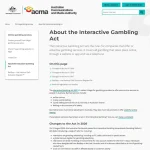
The Australian Communications and Media Authority (ACMA) oversees compliance with federal interactive-gambling rules and enforces the Act. Its role is not limited to issuing general guidance: it can take enforcement action against services that breach the law. Where a website provides a prohibited gambling service, or advertises one to Australians, ACMA may ask internet service providers in Australia to block access to that site.
A block is an access measure, not a finding that every site a user can reach is lawful or safe. Nor does a website becoming inaccessible mean that the underlying service has changed its status. ACMA’s request is directed to Australian internet providers, which are asked to restrict access for their users. For someone looking at an offshore crash casino, the practical point is that availability in a browser does not establish permission to serve Australian customers.
Casino Dice Games in Australia: Rules and Legality
The scale of this work is reflected in ACMA’s reported actions. Since November 2019, it has blocked more than 1,455 illegal gambling and affiliate websites after enforcement action. The blocked sites include both gambling services and websites that promote them, so the figure is not a count of casino operators alone. It indicates the breadth of the regulator’s response across the online ecosystem.
There is a discrepancy in published totals for services that have left the Australian market since ACMA began enforcing the rules in 2017. One reported figure is more than 210 withdrawals; another is more than 190. These should not be combined into a single precise total. Both describe services withdrawing after enforcement began, but the difference means the reported scale should be presented with care.
Website blocking also does not make offshore services equivalent to locally authorised online casinos. Real-money online casino services are prohibited from being offered to people in Australia under the federal framework; an offshore licence does not override that restriction. Some offshore operators may accept Australian payments, but payment acceptance is not evidence that their service is permitted under Australian law. Likewise, a site’s appearance, branding or claims about its licensing do not alter the rules that apply to offering the service here.
ACMA Enforcement
Since November 2019, the Australian Communications and Media Authority has blocked more than 1,455 illegal gambling and affiliate websites.
For readers, the key distinction is between access and legal status. A crash game site may be reachable at one point and blocked later, or remain visible through a link, while the prohibition on offering the service remains in place. ACMA’s blocking powers are one way the law is enforced, alongside other enforcement action. They are not an endorsement of sites that have not been blocked, and the absence of a block should not be treated as approval.
This framework concerns the service being supplied to Australians, rather than the particular theme or format shown on screen. Whether a site describes a game as a plane-themed crash game, a casino crash game or something else does not by itself change the legal question: is a prohibited real-money interactive gambling service being offered to people in Australia? ACMA monitors compliance with the federal rules and can seek access restrictions when prohibited services or their advertising are found.
What “Best” Means: Bonus Terms and Their Cost
When choosing a casino for crash games in Australia, you can use this list to check the licensing and payment details available for each operator. Consider which of those details matter most to you before signing up.
1. LevelUp Casino
License: Curacao eGaming OGL/2023/174/0082 (Dama N.V.) · Min. deposit: A$15 LevelUp Casino lists a Curacao eGaming licence held by Dama N.V. Its minimum deposit is A$15.
2. WinSpirit Casino
License: Curacao eGaming OGL/2024/923/0383 (Antillephone N.V.) · Min. deposit: A$30 WinSpirit Casino lists a Curacao eGaming licence held by Antillephone N.V. The minimum deposit is A$30.
3. House of Pokies
License: international iGaming licence – jurisdiction not named in the source · Payout speed: PayID 1-24 hours · Min. deposit: A$30 (PayID from A$10) House of Pokies lists an international iGaming licence, though the jurisdiction is not named in the source. PayID payouts are listed at 1–24 hours; the minimum deposit is A$30, or A$10 with PayID.
4. Roby Casino
License: Curacao eGaming (Roby Games Ltd) Roby Casino lists a Curacao eGaming licence held by Roby Games Ltd.
5. Golden Pokies
License: Curacao Golden Pokies lists a Curacao licence.
6. MrPacho
Payout speed: crypto 30-120 minutes, fiat 24-72 hours · Min. deposit: A$30 MrPacho lists crypto payouts at 30–120 minutes and fiat payouts at 24–72 hours. The minimum deposit is A$30.
7. Thor Casino
License: Curacao – Antillephone N.V. (Versus Odds B.V.) · Min. deposit: EUR 20 Thor Casino lists a Curacao licence associated with Antillephone N.V. and Versus Odds B.V. Its minimum deposit is EUR 20.
8. Ricky Casino
Payout speed: crypto under 1 hour, PayID 1-3 business days · Min. deposit: A$20 (A$30 to qualify for the bonus) Ricky Casino lists crypto payouts in under an hour and PayID payouts in 1–3 business days. The minimum deposit is A$20, or A$30 to qualify for the bonus.
9. Playfina Casino
License: Curacao eGaming (Hollycorn N.V., since 2017) · Min. deposit: A$20-30 (depends on the offer) Playfina Casino lists a Curacao eGaming licence held by Hollycorn N.V. since 2017. Its minimum deposit is A$20–30, depending on the offer.
10. GoldenCrown
License: Curacao Gaming Control Board OGL/2023/176/0095 (Hollycorn N.V.) GoldenCrown lists a Curacao Gaming Control Board licence held by Hollycorn N.V.
“Best” is not a useful label unless you know what is being compared. A bonus may look large while its conditions make the associated funds difficult to withdraw. For a crash-game offer, the practical question is not simply how much is credited, but what you must do before any bonus-derived winnings become withdrawable.
Bonus funds are not cash. They may be subject to wagering requirements: a stated amount of betting that must be completed before the operator will consider a withdrawal of winnings linked to the bonus. The requirement is often expressed as a multiplier. A specialist review describes requirements in the range of 30–50 times, but that is a report about offers it examined, not a rule that applies to every operator or promotion. The written terms for a specific offer determine what applies.
The calculation depends on the base amount named in those terms. An affiliate review gives this example: a $100 bonus with a 40x wagering requirement calls for $4,000 in bets before bonus-derived winnings can be withdrawn. The multiplier does not mean that you must lose that amount; it describes the total qualifying bets required. But completing the turnover does not guarantee a profit or a withdrawal. The funds can rise or fall while you play, and separate conditions may still apply.
Check what the multiplier is applied to. It may refer to the bonus alone, the bonus plus a deposit, or another defined amount. Those formulas produce different turnover totals even when the displayed multiplier is the same. The offer should state the calculation base clearly. If it does not, you cannot reliably compare its cost with another offer.
Mines Casino Game in Australia: How It Works
The games that count can matter just as much as the multiplier. Some terms give different games different contributions, or exclude some games from wagering altogether. A specialist review reports one example in which blackjack contributes only 10% toward a requirement. That figure should not be treated as a general casino rule: it illustrates why you need to check the contribution table for the particular offer. If a game contributes only part of each bet, the qualifying turnover accumulates more slowly than the amount staked.
For crash games, do not assume that a game qualifies merely because it appears beside a bonus offer or is available on the same site. Look for the game’s name or category in the promotion terms, then check its contribution rate and any exclusions. If the terms do not explain whether crash-game bets count, the apparent value of the offer cannot be assessed from the headline alone.
Other conditions can affect the result: a maximum bet while wagering, a withdrawal cap, a deadline, or rules about cancelling the bonus. These are not interchangeable details. For example, a maximum-bet condition can affect whether your play remains eligible, while a withdrawal cap can limit what may be paid even after the wagering requirement is completed. Read the full terms before accepting anything, and do not infer a condition from the way an offer is advertised.
Bonus Comparison Checklist
- Identify the amount used to calculate wagering
- Check the multiplier
- Verify which games qualify and their contribution rates
- Review restrictions on bets or withdrawals
A useful comparison is therefore a short checklist: the amount used to calculate wagering, the multiplier, which games qualify and at what contribution, and any restrictions on bets or withdrawals. Compare the actual obligations, not just the promotional figure. If a term is unclear, treat the value as uncertain rather than filling in the gap with an assumption.
This distinction matters in Australia. The Interactive Gambling Act 2001 prohibits operators from providing real-money online casino services to people in Australia. A discussion of bonus conditions is not a recommendation to use an offshore casino or accept a real-money offer. If you are assessing a promotion you have encountered, understanding its terms can show why its advertised value may differ from what can be withdrawn; it does not change the legal status of the service. Gambling can cause serious harm, particularly to vulnerable people. Only people aged 18 or older may gamble.
Crash Games, Pokies and Progressive Jackpots
A crash game and a pokie are different game categories, even when a site groups them under the same casino heading. A crash game is built around a changing multiplier and a decision about when to end a round; a pokie uses reels or another slot-style display and pays according to its game rules. Calling a pokie a “crash slot” does not change how it works, and a crash-game label does not mean the game has a progressive jackpot.
Real Money Casino Table Games in Australia
A progressive jackpot is a prize pool that increases as players use eligible machines or games linked to that pool. The amount can therefore depend on play across more than one machine. The pool’s structure matters: a rising displayed total does not, by itself, tell you which games contribute to it or which bets qualify.
There are two common structures. A standalone progressive is attached to an individual machine or game. Its pool grows locally through eligible play on that machine or game. A networked progressive links multiple machines or games, so contributions can accumulate across a wider group. An online operator may link a fleet of games in this way. The larger network changes where contributions come from; it does not make every game on the site part of the jackpot.
Before treating a progressive as part of a game’s potential return, check the rules for that specific pool. In particular, look for the contribution rate—the share of eligible play that feeds the jackpot—and the minimum bet needed to qualify. A specialist review recommends checking both conditions, but eligibility is ultimately determined by the applicable game rules. Some games set a minimum qualifying bet; A$1.00 is one example, not a universal threshold.
The distinction between a contribution rate and a qualifying bet is important. The contribution rate describes how the pool grows when eligible play occurs. The minimum bet determines whether your play is eligible at all. If your stake falls below the stated threshold, the game may not count that play toward jackpot qualification, even if the base game remains playable. Check whether the rules refer to the total stake, a particular bet setting, or another condition, rather than inferring eligibility from the jackpot display.
Progressive Jackpot Structures
Standalone Progressive: Attached to an individual machine or game, where the pool grows locally through eligible play on that specific game.
Networked Progressive: Links multiple machines or games, allowing contributions to accumulate across a wider group of eligible games.
Also establish which pool the rules describe. A machine-level jackpot and a networked jackpot can have different contribution arrangements and eligibility conditions. A headline amount alone does not establish that every linked game contributes at the same rate, or that every stake qualifies. The rules should identify the relevant game or network and explain how qualification works.
This is why pokie-related crash searches can lead to confusing labels. A result may combine “crash” and “slots” as broad catalogue wording, but the useful distinction is the underlying format: a crash game is not a pokie merely because it appears beside pokies, and a progressive jackpot is a prize-pool feature rather than a game category. In Australia, real-money online casino services are prohibited for operators providing them to people in the country; this distinction is descriptive, not a recommendation to play either format.
Crypto Payments: Withdrawal Speed, Fees and Conversion
A crypto withdrawal has two separate stages that affect what you receive: the operator’s processing and the transfer through the relevant payment network. A specialist review has reported that crypto withdrawals can clear faster than other methods, while warning that network fees and conversion spreads may reduce the amount received. That is a reported comparison, not a timing guarantee for a particular payment.
Fast Payout Online Casinos in Australia: What to Check
The distinction matters because a transfer marked as processed is not necessarily the same as funds being available in the form you want to use. The operator may first approve and send a withdrawal; the receiving service may then credit it, and converting the asset into Australian dollars is a separate step. Delays or charges at any of these points can change the final result.
A network fee is the cost associated with sending a transaction through the relevant crypto network. Depending on how the payment is handled, it may be deducted from the transfer or appear as a separate charge. A conversion spread is the difference between the rate used to convert one asset into another and a reference market rate. Even if the displayed withdrawal amount looks unchanged, conversion can mean the Australian-dollar value received is lower.
Before relying on a speed claim, check what event the stated time describes: approval by the operator, broadcast of the transfer, confirmation by the network, or credit to your receiving account. These are different milestones. A claim that a withdrawal is “fast” is incomplete if it does not say which stage it covers and whether it accounts for conversion.
Also check the withdrawal terms and the payment service’s fee information before starting a transaction. Confirm which asset the operator sends, which asset your receiving service accepts, how charges are applied, and whether conversion happens automatically or requires a separate action. If the amount is converted, compare the expected Australian-dollar value with the net amount after the stated fee and rate. The relevant figure is what reaches your account after all deductions, not merely the amount shown when the withdrawal is requested.
Crypto payment speed does not resolve whether an online casino service may lawfully be provided to people in Australia. The Interactive Gambling Act 2001 prohibits operators from providing real-money online casino games to customers physically located in Australia. Payment method and transfer speed do not change that legal position.
Attention: A transfer marked as processed by an operator is not the same as funds being available, as network fees and conversion spreads may reduce the final amount received.
Bitcoin and Cashout Checks
Using Bitcoin does not remove the conditions attached to a withdrawal. If you are comparing information about a Bitcoin crash game, check the cashout rules separately from the game description: the payment method does not tell you the minimum withdrawal or which identity documents may be requested.
Offshore sites commonly set a minimum withdrawal in the A$75–A$150 range. That threshold determines how much must be available before a request can be submitted; it is not a promise that the full balance is eligible or that payment will be approved. Read the withdrawal terms for the specific account, including whether the stated minimum applies to Bitcoin withdrawals and whether any balance restrictions are listed. Do not assume that a figure shown for another payment method also applies to Bitcoin.
The first cashout is often where identity checks become relevant. A site may ask for KYC documents, with examples including a passport or driver’s licence and a utility bill. Check what documents are accepted and whether the account details match them before relying on a displayed balance. If a document is unclear, outdated or inconsistent with the account information, the review may take longer or the withdrawal may not proceed until the issue is resolved. These checks concern account identity; they do not establish that a particular crash game or payment arrangement is fair or suitable.
Live Baccarat Online in Australia: Rules and Risks
Terms for a balloon-style or chicken-themed crash game do not, by themselves, determine how withdrawals work. Separate the game’s presentation from the account’s payment conditions. Before considering a cashout, locate the minimum, the required KYC documents and any conditions that apply to the selected method. If those details are difficult to find, you cannot reliably predict whether the balance can be withdrawn.
There is also an important Australian context: the Interactive Gambling Act 2001 prohibits operators from providing real-money online casino games to people in Australia. Using Bitcoin does not change that restriction. This information is not a recommendation to use an offshore casino. People who gamble must be at least 18, and gambling can cause serious harm, particularly for vulnerable individuals.
What to Check Before Trying a Free Game
A free-play version can help you inspect a game’s layout, but its label alone does not tell you what is being offered. Before opening one, check whether it is genuinely a no-cost demonstration or part of a service that also invites you to deposit money. Do not enter payment details or create an account just to test a game unless you understand what the service will do with that information.
Check the page’s description of the play mode. It should make clear whether any displayed balance is simulated, whether winnings can be withdrawn, and whether moving from demonstration play to real-money play is possible. If those points are unclear, treat the balance as a display rather than money you can receive. A free game is not evidence that a real-money version is available to Australians or that its operation would be lawful.
Do
- Verify the software provider and game title
- Check if the balance is simulated
- Read the full page terms
Don’t
- Enter payment details to test a game
- Install unclear browser extensions
- Assume free versions behave like real-money ones
For crash-game software, verify the game’s title and the identity of the software provider shown on the game or its information page. Look for a clear explanation of how the demonstration is started and whether it requires a download. Avoid installing files or browser extensions when their purpose and publisher are not clear. A familiar visual design is not enough to establish who made the software or what version you are viewing.
Do not assume that free and real-money versions behave identically. A demonstration may use simulated credits, and its display may not establish how a separate real-money service handles play, payments or account conditions. Likewise, being able to open a game without paying does not establish that it is independent of a gambling service. Read the surrounding page and terms, not only the game screen.
Keep personal safety in view. Gambling is for adults aged 18 or older, and gambling can cause serious harm, particularly to vulnerable people. Free play may still expose you to gambling prompts or encourage continued play; stop if it is affecting your wellbeing or making you feel pressure to deposit.
Big Red Pokies Online in Australia: How They Work
A useful check is simple: can you identify the play mode, the software presented, and whether money or personal details are involved? If not, do not proceed. A free crash game can show you an interface; it cannot, by itself, verify the conditions or behaviour of a real-money game.
Cash-or-Crash Searches and the Victorian Pokies Context
“Cash or crash” can describe a poker-machine theme or style, while an online crash game is a different format. The shared word does not make the products interchangeable: a pokie is built around the machine game, whereas a crash game refers to a separate online-game category. If you are trying to identify what a description means, check whether it refers to an EGM in a venue or to an online game. A phrase such as “cash-or-crash casino” does not, by itself, establish which one is meant.
The Victorian figures reported by gamble.com.au put poker-machine losses in a broader context. The report said players in Victoria lost $2.6 billion on pokies over the year it covered, an increase of more than $44.7 million compared with 2015. Those are reported losses, not a measure of what any individual player will lose, and the period attached to the report matters when interpreting the figures.
Real-Money Online Pokies in Australia: Legal Guide
The same report identified the Epping Plaza Hotel, in Melbourne’s north, as generating more than $21 million from 100 machines during the year in question. That venue-level figure describes money generated across its machines; it should not be read as a typical result for every venue or as a prediction of an individual player’s outcome. Aggregate and venue totals can show the scale of activity, but they do not make the machine a source of income.
A proposed policy response has focused on the size of individual bets. Senator Nick Xenophon and MP Andrew Wilkie advocated capping poker-machine bets at $1. A proposed limit is not the same as a rule currently applying everywhere, so it should be understood as a reform proposal rather than a description of present machine settings.
These distinctions matter when a cash-or-crash label brings pokies to mind. The Victorian figures concern poker-machine losses and the proposal concerns poker-machine betting; neither explains the rules or outcomes of an online crash game. Poker-machine gambling can cause serious harm, particularly for people who are vulnerable to gambling problems. Gambling is for adults aged 18 or older, and losses should not be chased or treated as a way to earn money.
Victorian Pokies Context
- Victoria reported $2.6 billion in pokie losses over the reported year
- The Epping Plaza Hotel generated over $21 million from 100 machines
- Policy proposals have suggested capping individual bets at $1
- These figures relate to land-based EGMs, not online crash games
Crash-Game Rules and Strategy: What Can Be Stated
A strategy is a set of decisions; it is not evidence that those decisions can determine a game’s outcome. Without confirmed rules for a particular crash game, claims about when to act, how much to stake or whether a pattern predicts what happens next cannot be treated as reliable instructions. A method may describe a player’s chosen routine, but that alone does not show that the routine changes the result.
Keep the rules and the strategy separate. Rules define how a game operates, including what actions are available and how a round ends. A strategy is a player’s approach within those rules. If you cannot establish the rules from the game’s own materials, you cannot assess whether a proposed approach is even applicable. Do not assume that instructions for one game apply to another because both use a rising multiplier or a similar visual format.
Casino in Sydney: Online Options and Local Rules
Be cautious with confident claims that a particular timing rule, staking pattern or sequence can prevent losses or secure a return. A description of past results does not, by itself, establish what will happen in a later round. Nor does a memorable win prove that a method works consistently. Treat claims as unproven unless there is clear, relevant evidence—and do not mistake an explanation of how to use a feature for evidence that it improves outcomes.
The practical limit is simple: no crash-game strategy should be presented as a way to control results when the game’s rules and supporting evidence have not been established. If you are considering gambling, you must be at least 18, and remember that gambling can cause serious harm to vulnerable individuals. In Australia, real-money online casino services are prohibited for operators to provide to people in the country. This makes strategy advice no substitute for understanding the legal setting or the risks involved.
Online Casinos in Australia: How to Assess Trust
Playing Crash Games and Checking Fairness Claims
A fairness label is a claim to examine, not proof that a game’s outcomes are impartial. Before relying on a “provably fair” explanation, check whether it describes a process you can independently reproduce, rather than merely displaying technical terms or a verification badge.
A useful explanation should identify the inputs used to produce an outcome and show how those inputs are combined. If the method involves cryptographic hashes or seeds, the rules should explain what each value represents, when it is fixed, and how you can check that the published result follows from them. A hash alone is not enough: you need the stated algorithm and the relevant inputs, plus a clear way to recalculate the outcome.
Check whether the explanation covers the full process, including how a new round is generated and whether values can be changed after they are committed. Look for instructions that let you test a completed round yourself. If the operator’s explanation omits steps, uses terms without defining them, or requires you to accept an unexplained result, the claim is not independently established by the material shown.
Fairness verification has limits. It can help test whether a particular outcome matches a stated procedure; it does not establish that the procedure is safe, that the game is suitable for you, or that you will win. Nor does a technical demonstration by itself confirm that every game bearing the same label uses the same process.
In Australia, the Interactive Gambling Act 2001 prohibits operators from providing real-money online casino games to people in the country. This explanation is not an invitation to play. Gambling can cause serious harm, particularly for vulnerable people; anyone who gambles must be at least 18. If you encounter a fairness claim, judge it by whether its method and inputs are transparent and reproducible—not by the name attached to it.
Pokies

Three-Reel Slots in Australia: How to Choose
Explore how random outcomes, RTP, paytables and bonus features shape the experience across classic and...

5-Reel Slots in Australia: RTP and Results
See how RNG-driven outcomes differ from RTP, and what paytables and free-play modes can reveal...

7-Reel Slots in Australia: Rules, RTP and Play
Understand bonus triggers, randomness, paytables, RTP and the limits of free play before trying a...

Online Pokies in Australia: Legal and Payment Guide
The guide explains operator restrictions and practical checks around real-money play, bonuses, deposits and withdrawals....

Aussie Online Casinos: Legal Rules and Key Checks
Australia’s rules target operators, while practical checks cover payments, verification, bonuses and withdrawal terms. The...

Aussie pokies online in Australia: what to know
The term “Aussie pokies” signals a local framing, but does not establish a service’s licensing,...

Australian Online Pokies: Assessing Real-Money Sites
The guide explains the limits of offshore play, payment checks, bonus terms and withdrawal conditions...

Bonus Buy Slots in Australia: Features and Demos
A bonus buy skips the usual trigger and takes its stated price from your balance;...

Adelaide Casino: Hotel, Rooms and Visitor Information
An overview of accommodation checks and visitor topics, including casino rooms, parking, food, entertainment and...

Brisbane Casino Hotels: Booking and Access Guide
Room descriptions, offer conditions and casino access are separate details to verify when considering a...

Best Casino in Canberra: Hotels, Games and Booking Checks
An overview of nearby accommodation checks alongside searches for games, dining, transport, parking and other...

Darwin Casino: What to Verify Before You Visit
A practical guide to checking venue details, booking terms and amenities without treating proposals or...

Hobart Casino Guide: Poker, Rooms and What to Check
Poker offerings can differ by venue and date, while casino rooms may mean accommodation rather...

Best casino in Melbourne: stays and visitor details
A practical guide to accommodation, dining, facilities and visitor details to verify before a Melbourne...

Best Casino in Perth: What to Check Before Booking
A practical guide to accommodation, venue facilities and other details to verify when researching Perth...

Queensland Casino Hotel Stays: What to Check
A practical guide to checking room terms and confirming casino hotel amenities, dining, events and...

Casino in Sydney: Online Options and Local Rules
A Sydney location does not establish that an online service is based in the city...

Best Casino in Tasmania: Hotel and Venue Checks
Casino and hotel listings can describe different properties, so accommodation, booking responsibility and venue details...

Best Casino in Victoria: What to Check Before Booking
Understand which hotel, room, dining and access details need confirmation, and what the available information...

Best Casino in Western Australia? Hotels and Access
Accommodation, casino entry, dining and facilities are separate details, so listings should be checked for...

Fast Payout Online Casinos in Australia: What to Check
A payout claim covers several stages, from account checks and approval to transfer and processing...

High-volatility slots in Australia: payouts and risk
See how independent RNG results, payout patterns and feature waits affect the experience of high-volatility...

Instant Payout Casinos in Australia: What to Check
A withdrawal can involve separate approval, payment and receiving stages, while bonuses or account conditions...

Best Keno Online Casino in Australia: Legal Context
Keno game features, offshore services and Australian legal boundaries are separate questions, not a basis...

Live Dealer Casino Online in Australia: Rules and Checks
Understand how Australian rules, bonus conditions, payment checks and player protections shape real-money live dealer...

Live Casino Online in Australia: What the Rules Say
The guide sets out the Australian legal boundary and explains what live-game, bonus and access...

Low-Volatility Slots in Australia: How They Work
Low volatility usually means smaller wins occur more often, but it cannot predict a spin...

Pokie Machines in Australia: Rules, Odds and Play
A practical guide to reading paytables, RTP and volatility, understanding free-play limits, and spotting legal...

Best Pokies in Adelaide: Venue and Gaming Guide
A practical guide to checking venue status, understanding gaming information and assessing common Adelaide pokies...

Best pokies in Brisbane: how to compare venues
RTP, opening hours, venue evidence and payment conditions each answer different questions when comparing pokies....

Canberra Pokies: Venues, Hours and What to Verify
Understand how pokie outcomes and theoretical returns work, and where the available information about local...

Pokies in Geelong: Venue Hours, Access and Checks
A practical guide to checking venue access, interpreting machine information, and understanding what can be...

Pokies in Melbourne: Venue Details and What to Check
A practical guide to checking Melbourne venue locations, operating details, machine information and the limits...

NSW pokies: venue access, hours and odds
Venue listings may not confirm gaming-area access; the guide also covers odds, online limits and...

Pokies in Perth: Checking Venues and Visit Details
A practical guide to checking gaming-area access, interpreting return and randomness, and separating venue visits...

Best Pokies in South Australia: What to Check
RTP figures describe statistical returns, while venue checks and travel planning help put local pokies...

Best Pokies in Sydney: Venues and Availability
A Sydney search can point to a location, but venue details and machine operating hours...

Best Pokies in Tasmania: Hours, Locations and Play
Venue listings may show general trading hours, while gaming-machine availability, location details and payment terminology...

Progressive Jackpot Slots: Pool and Play Guide
Progressive prizes grow through eligible wagers, but pool rules, reset points and bonus conditions vary...

Real-Money Online Pokies in Australia: Legal Guide
A practical look at the legal position, deposits, bonus conditions, random number generators and access...

RTP pokies in Australia: how returns can vary
RTP reflects a game's long-run mathematical design, while casino configurations and individual outcomes shape what...

RTP Slots in Australia: Understanding Returns
RTP is a long-run theoretical measure, not a forecast for a session; game versions and...

Video Slots in Australia: RTP, RNG and Free Play
RTP describes theoretical returns over large samples, while RNG outcomes remain independent from spin to...

Big Red Pokies Online in Australia: How They Work
An independent spin result is not shaped by previous outcomes; the guide also explains what...

Casino Dice Games in Australia: Rules and Legality
A guide to how dice games are delivered online, how a roll resolves, and how...

Lightning Link Online Pokies in Australia: What to Know
Lightning Link is a venue-based game, so online listings, free play and real-money services need...

Live Baccarat Online in Australia: Rules and Risks
A practical guide to live baccarat rules, table features and platform checks, with the distinction...

Live Blackjack at Online Casinos in Australia
Live presentation does not alter the legal status of real-money blackjack, while payment, access and...

Live Roulette in Australia with English-Speaking Dealers
The guide distinguishes game formats, operator claims and live-dealer access, while explaining the Australian restriction...

Mines Casino Game in Australia: How It Works
The guide separates game mechanics from operator rules and explains access limits, demo play, bonus...

Online Casinos in Australia: How to Assess Trust
A practical look at licensing limits, payment routes, bonus terms and what available facts can—and...

Plinko Casino in Australia: Games, Risks and Rules
Plinko’s slot label alone does not establish its mechanics, outcome process or payout structure; reviews...

Pokies Tips and Tricks: What Spins Can Tell You
Understand what random outcomes can—and cannot—tell you, then use RTP comparisons and session limits without...

Real Money Casino Table Games in Australia
Live tables use physical dealers and equipment, while software-based games rely on an RNG to...